




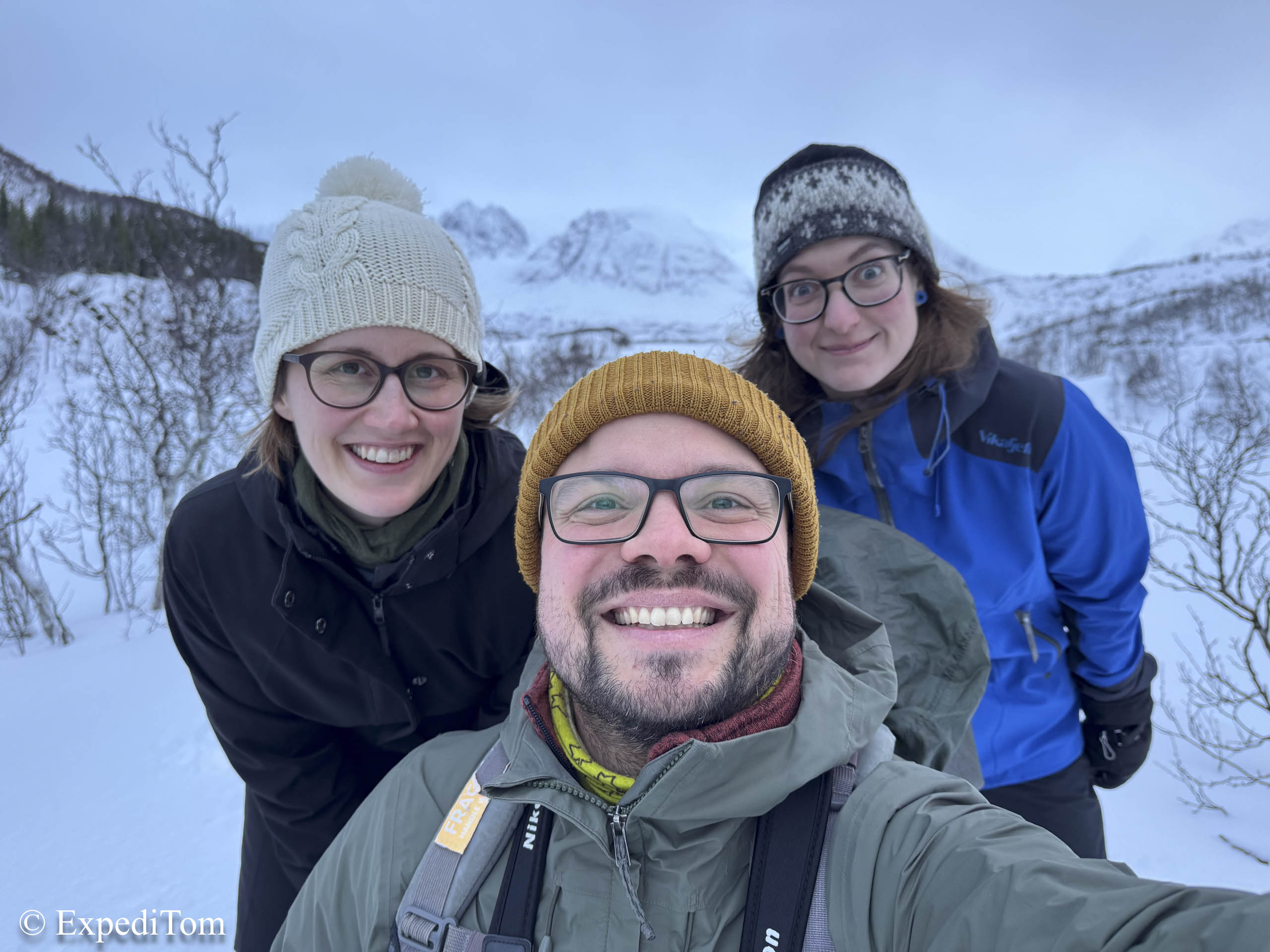



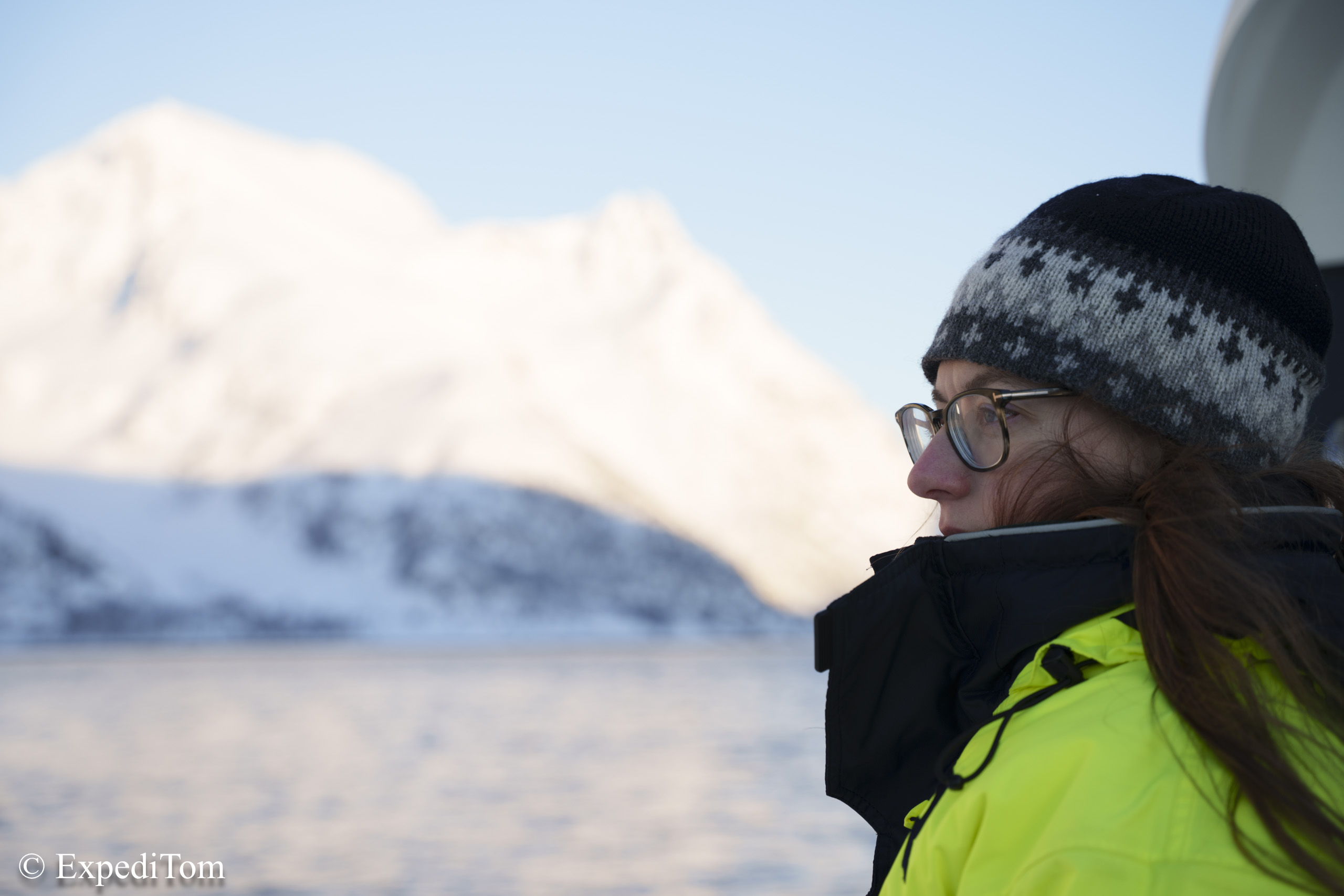






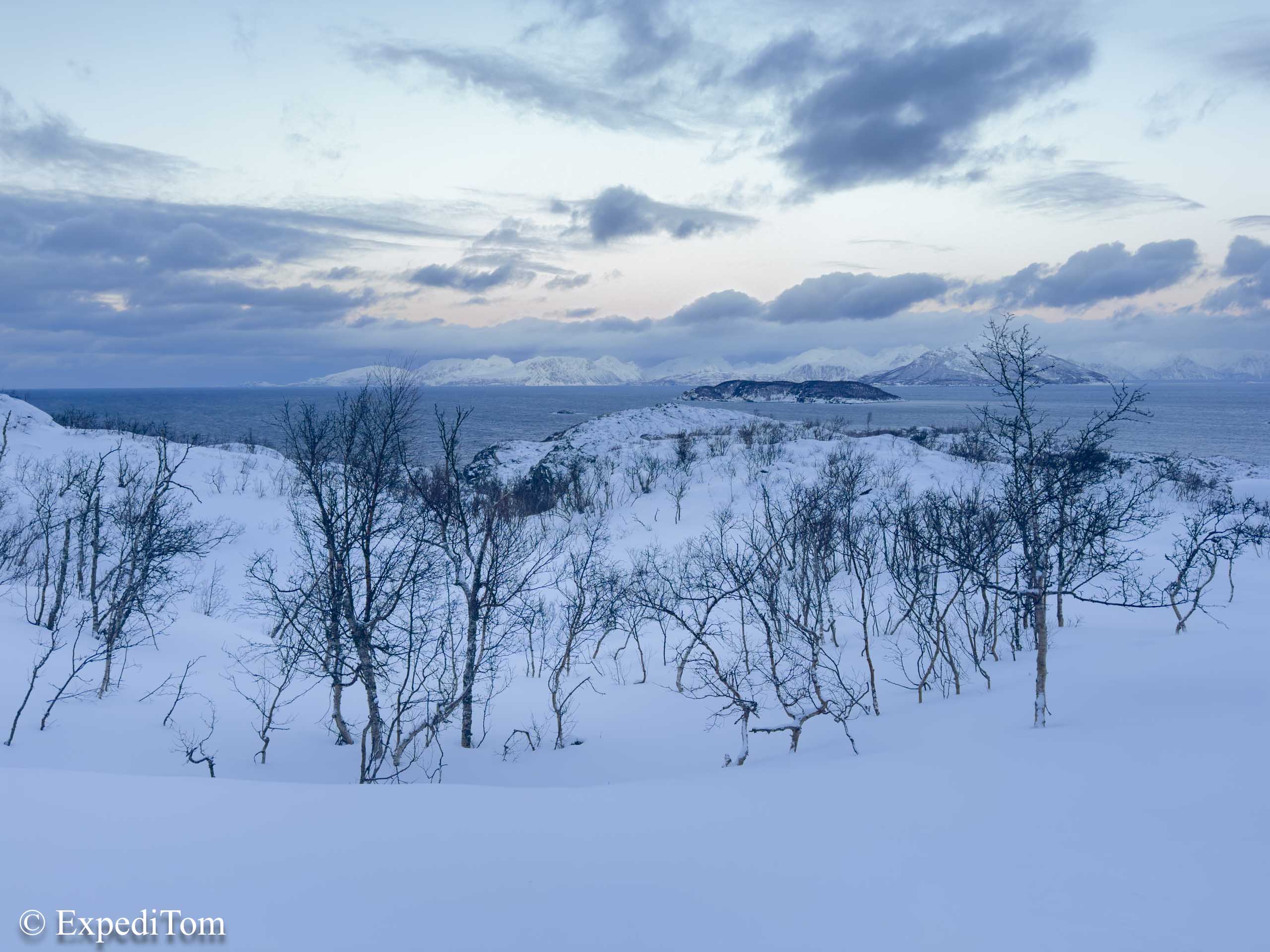
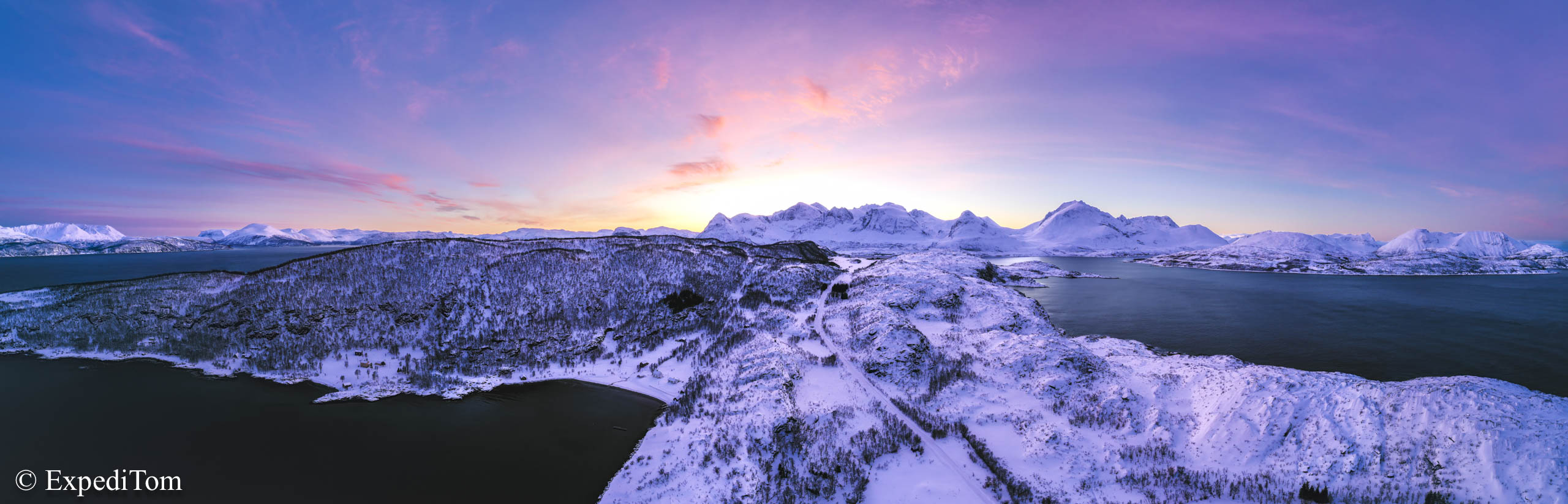
Northern Norway in winter is raw, quiet, and wildly unpredictable. We travelled far beyond Tromsø to the remote region of Skjervøy in search of Arctic wildlife.
When to see Orcas in Skjervøy?
We travelled far beyond Tromsø this time, heading north toward Skjervøy—a place known for a very specific spectacle: orcas hunting herring in the deep fjords between November and Mid-January. We arrived on February 2nd, due to the school holiday schedule, but the whales had already left by January 20th 2026.
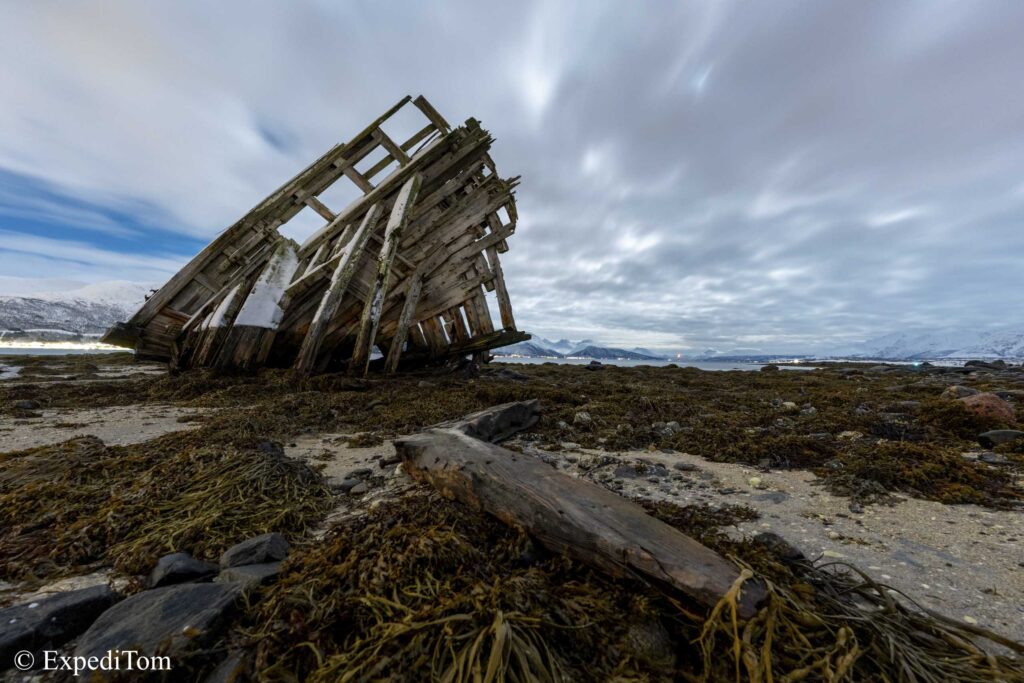
Yet, turning around was never an option. We had a cabin booked, a friend to see, and a need for the kind of silence you can only find when the road ends.

The Ride North: Icy Conditions
The drive north was a transition in itself. Leaving the relative bustle of Tromsø, the landscape opened up and the ferries took over where the asphalt failed. Last time we visited, we avoided the water, sticking to the land-based routes to stay flexible. This time, the ferries became a highlight. There is a specific rhythm to it: you roll on, your license plate is scanned automatically for payment, and for thirty minutes, you simply stop. You sit, you rest, and—in my case—you eat surprisingly good ferry hot dogs while the boat cuts through the icy slush of the fjord.
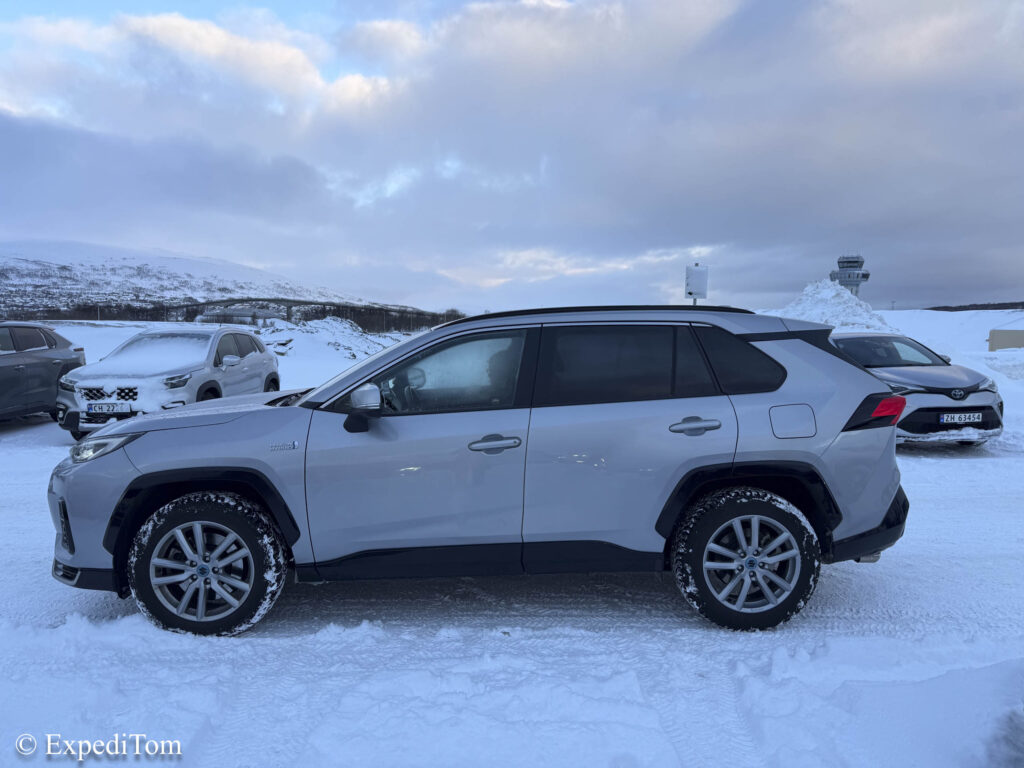
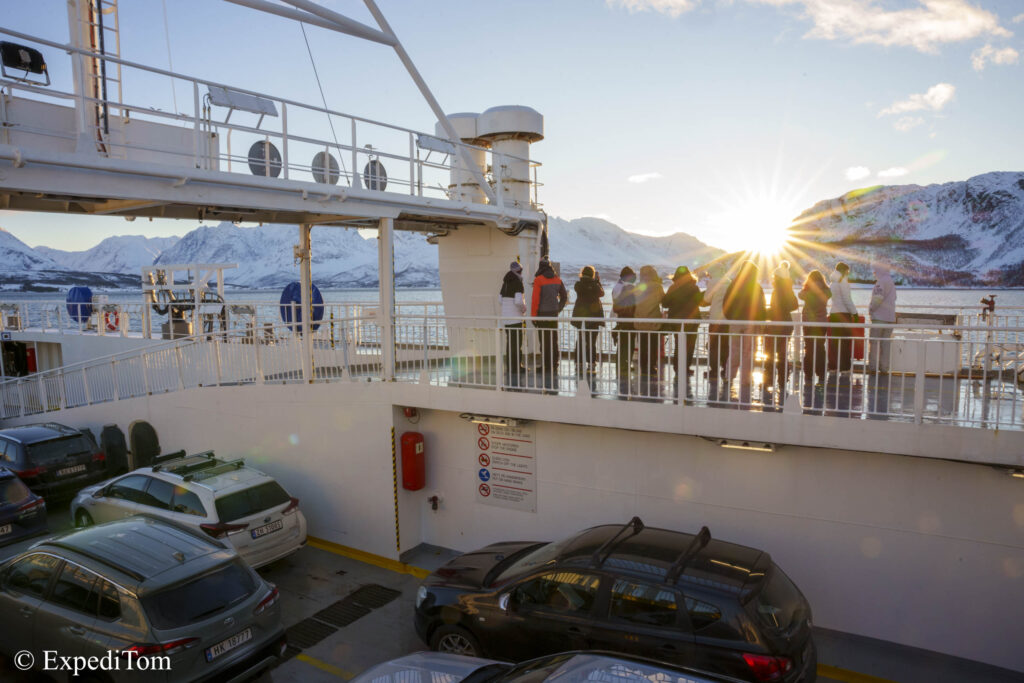
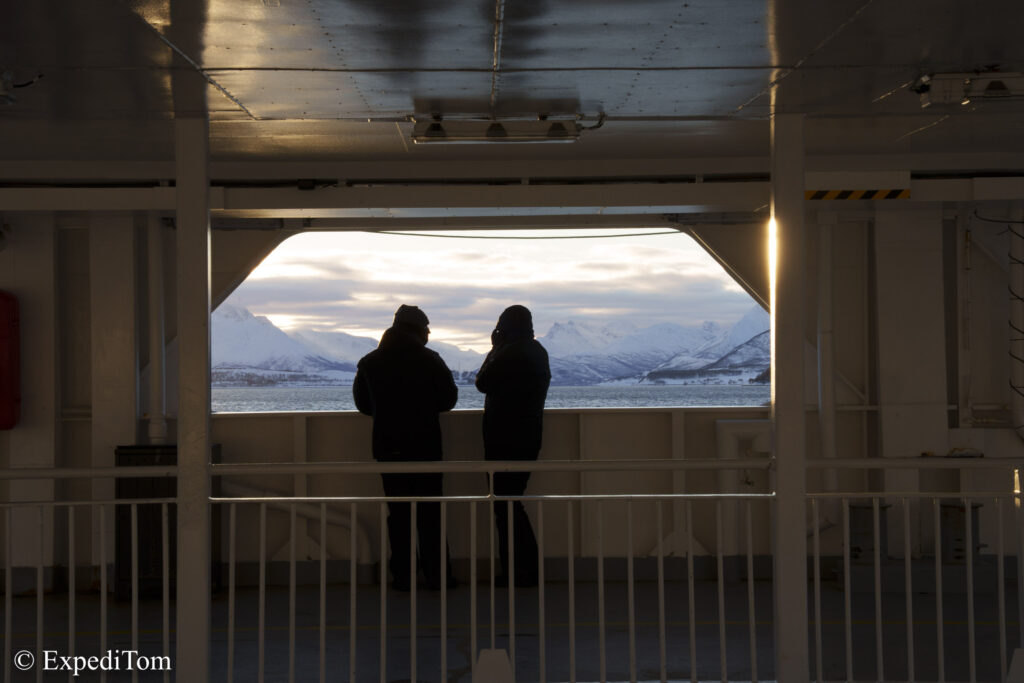
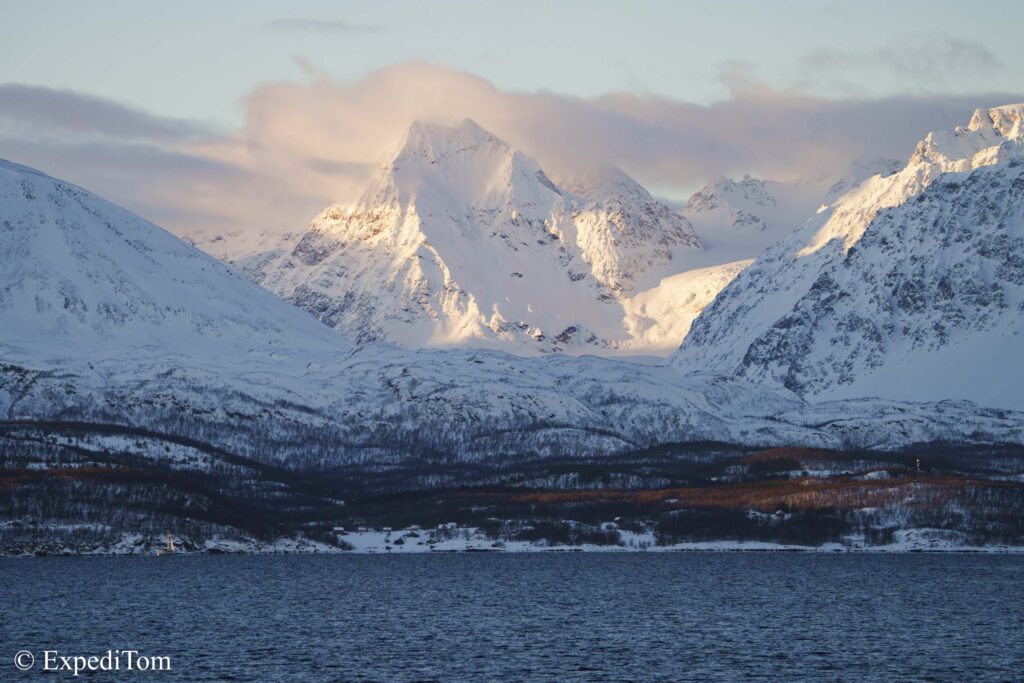

Out there, the breaks matter. The roads are a glass-slick challenge, and while the Norwegians cruise at speeds that feel ambitious for the conditions, walking on foot was actually the real danger. Without spikes, you’re a beginner on a skating rink.
The Hytte Life
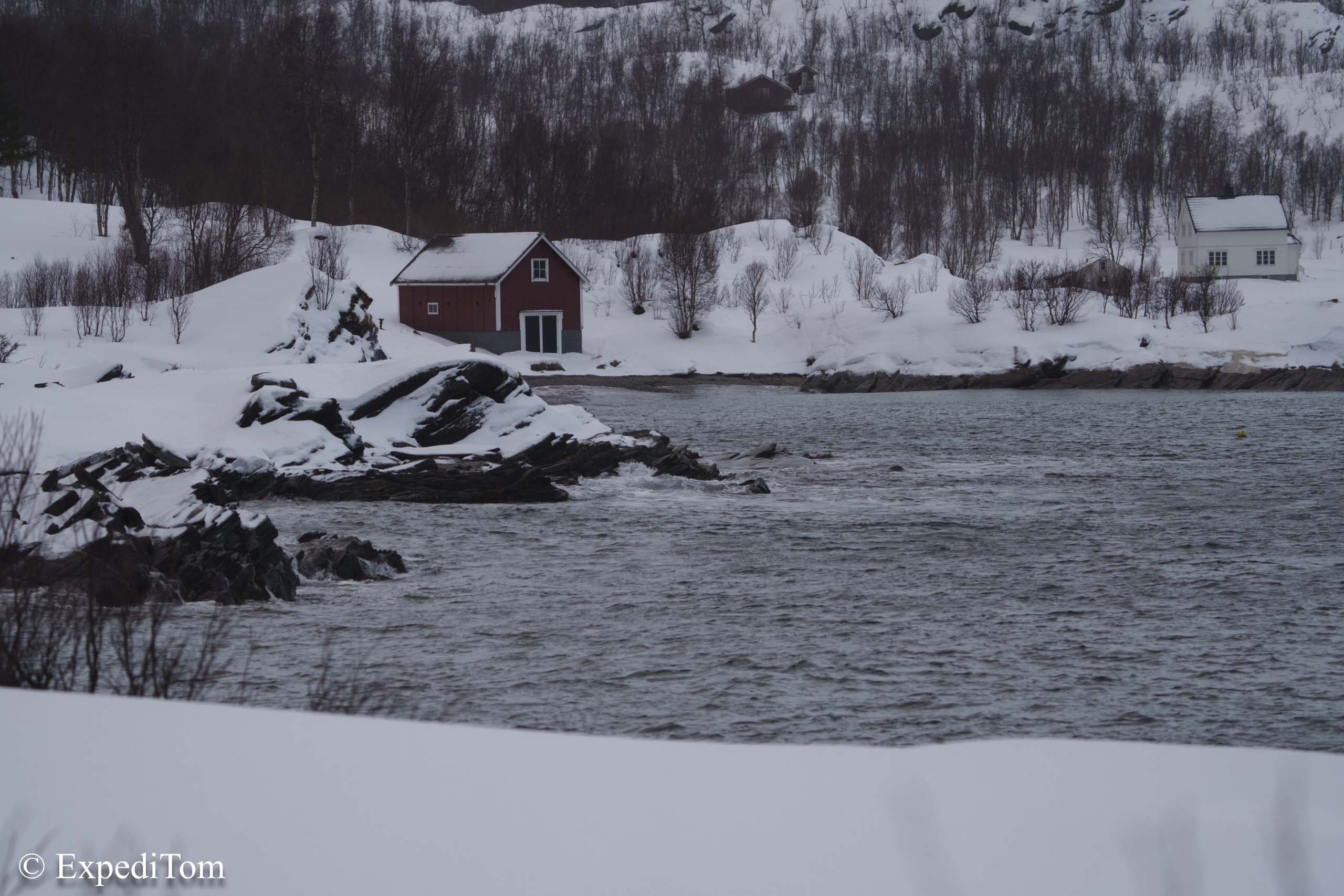
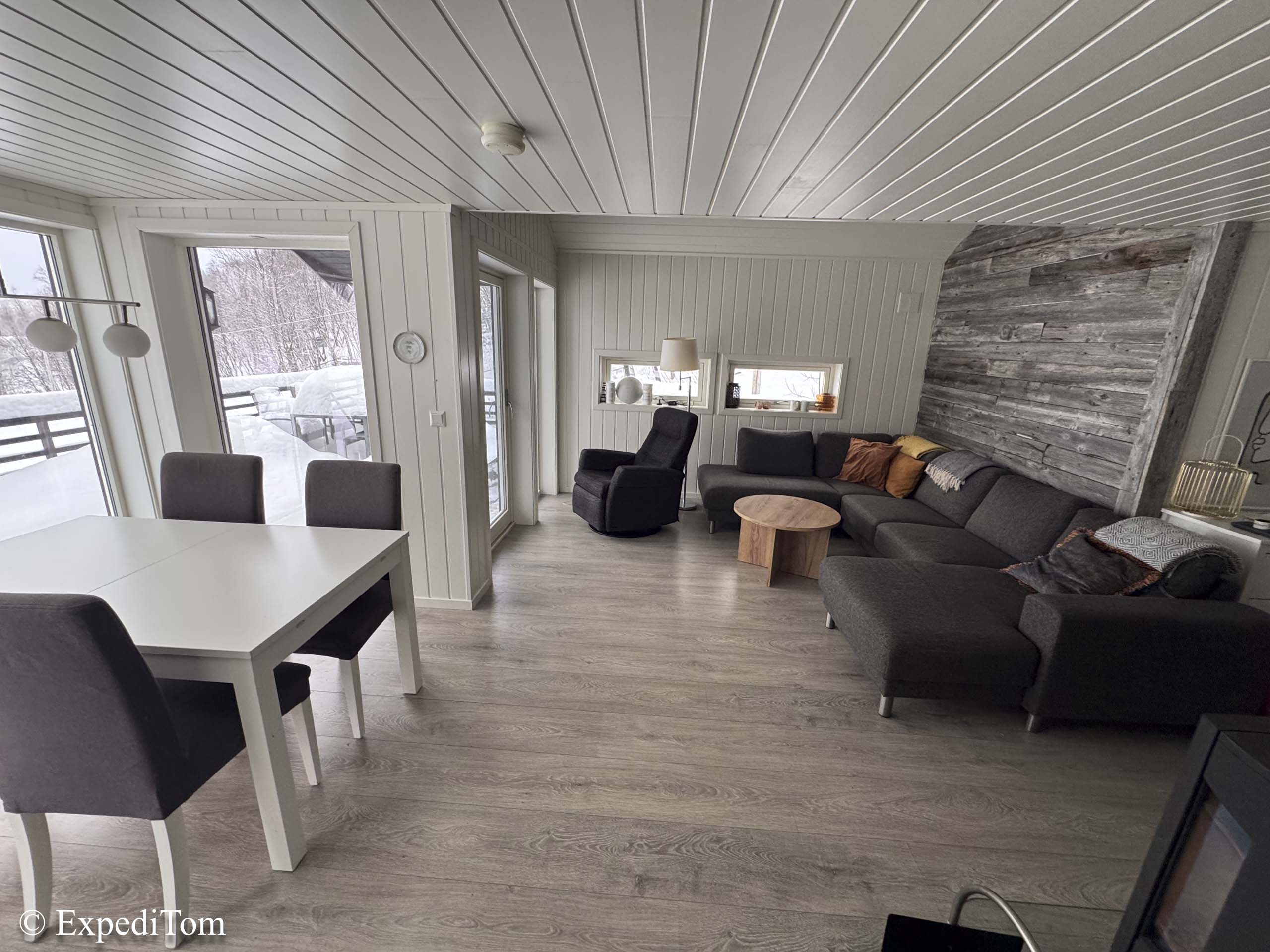
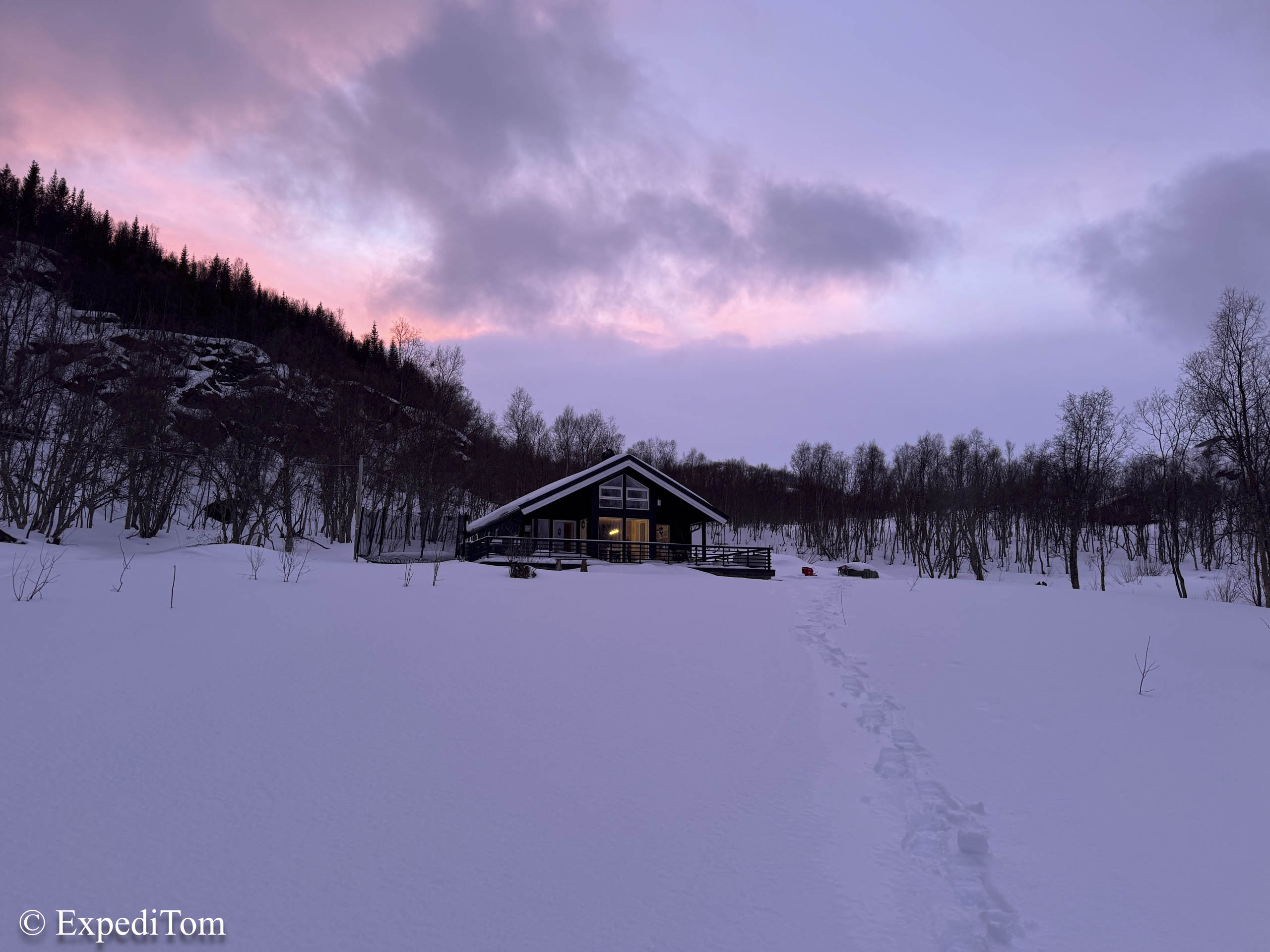
Our base was a remote hytte (cabin) near Skjervøy, perched right by the sea but tucked away from any glow of civilization. There was no direct road access. When we arrived, our host Steffen met us with a snowmobile to haul our gear and supplies across the drifts. It felt like stepping back in time, save for the modern conveniences waiting inside.
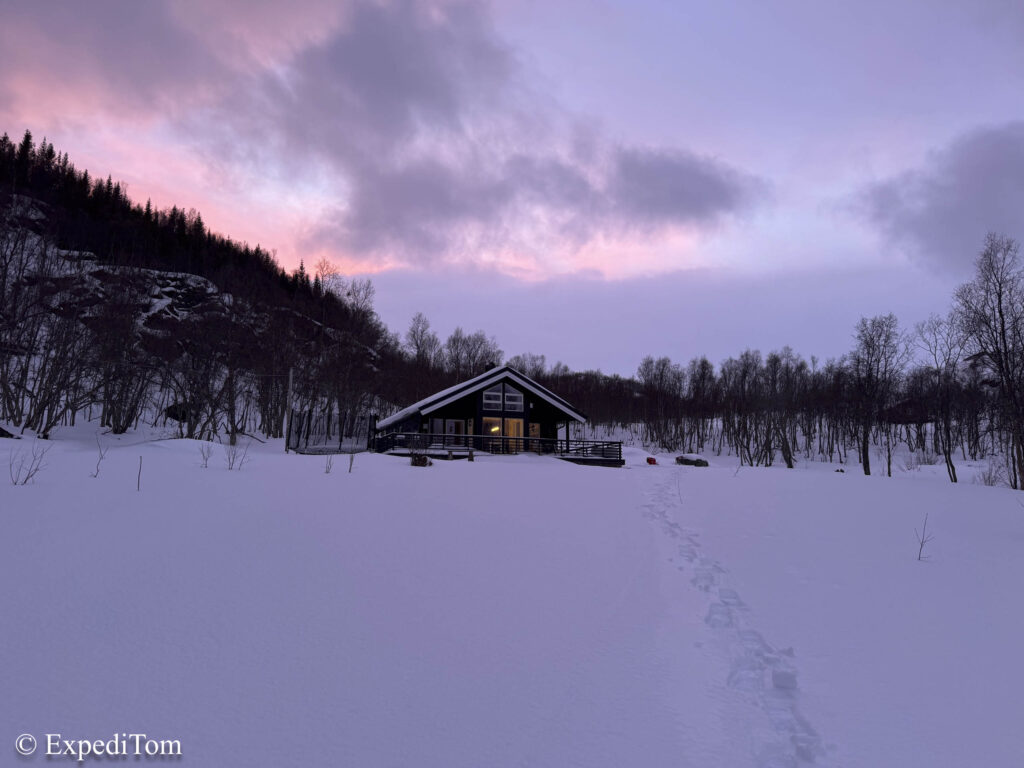
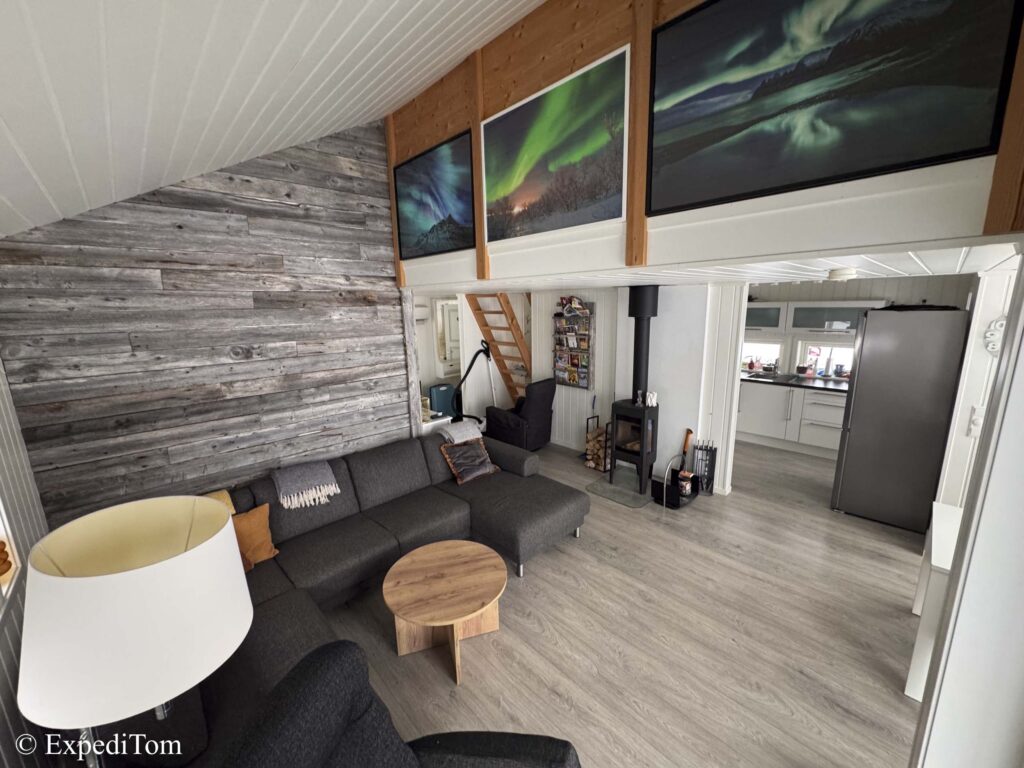
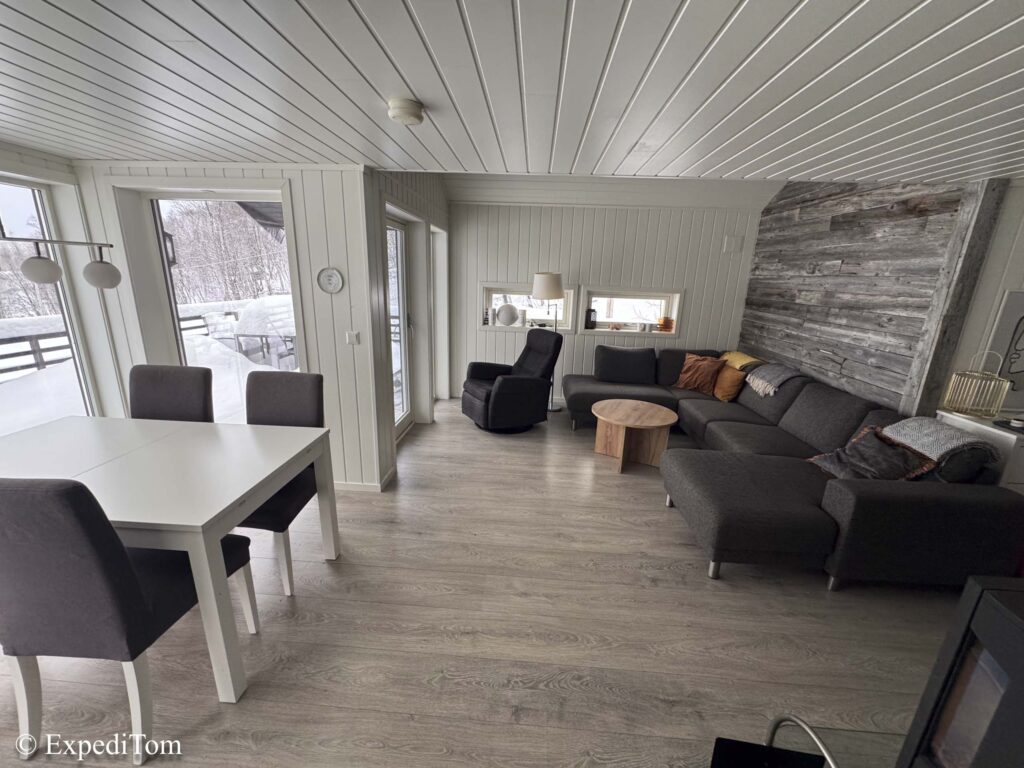
Life quickly narrowed down to the essentials. Mornings started slow by the fireplace, which provided the soul of the cabin’s heat. Outside, the Arctic light never quite reached the status of “daylight”—it was more of a persistent, ethereal blue glow that faded into a long, deep night. We fell into a cycle of “contemplation”: slow mornings, short days, and long nights spent in the outdoor jacuzzi. There is something surreal about sitting in steaming water while the air freezes your hair, sipping on boxed wine that—honestly—tasted far better than I care to admit.
A Note on the Road
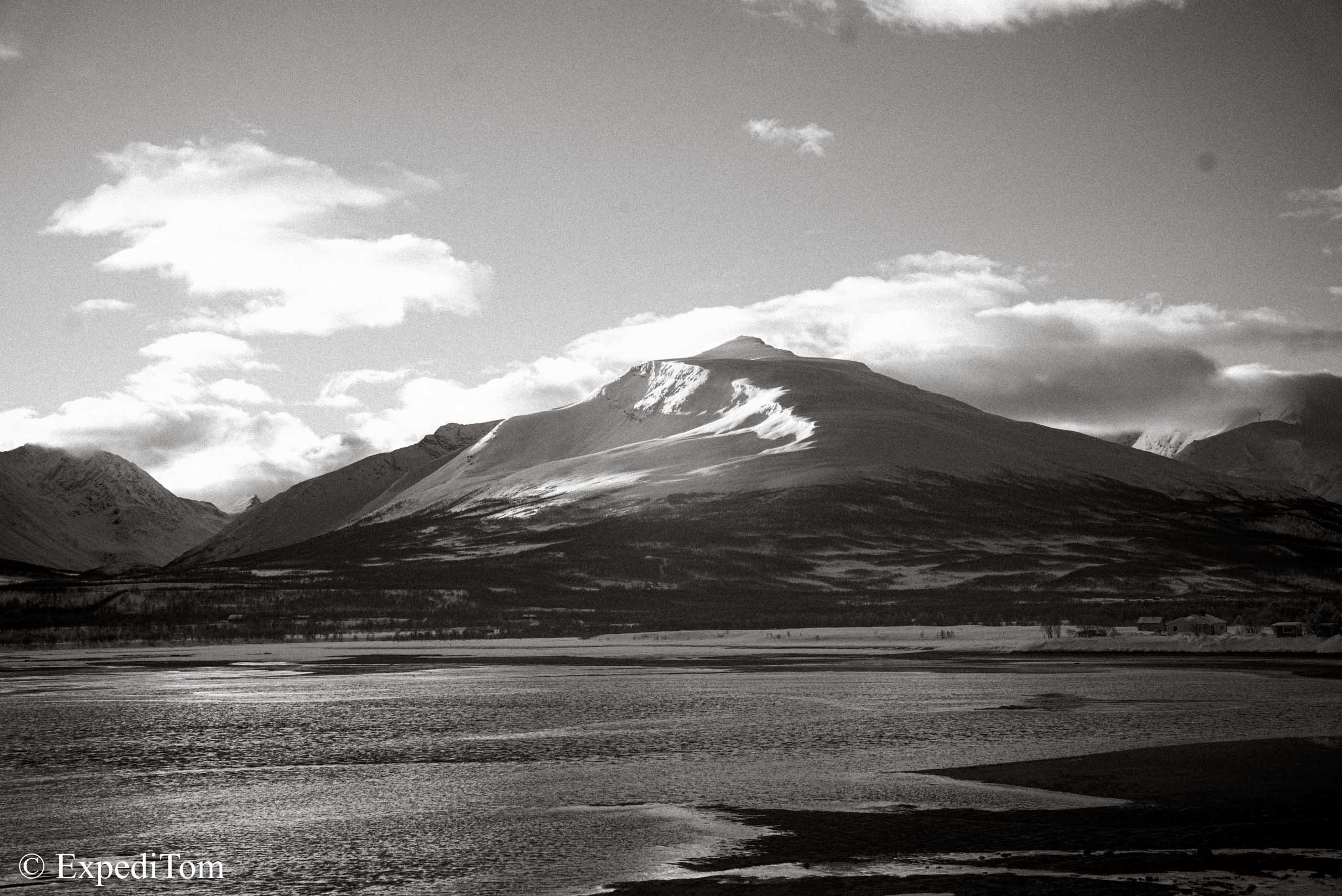
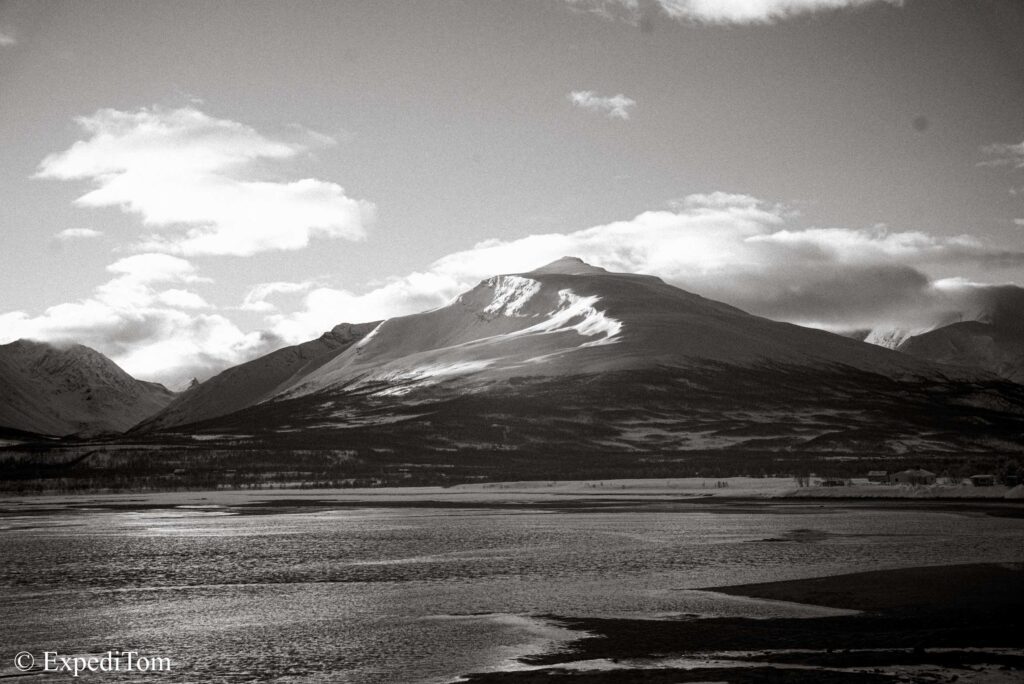
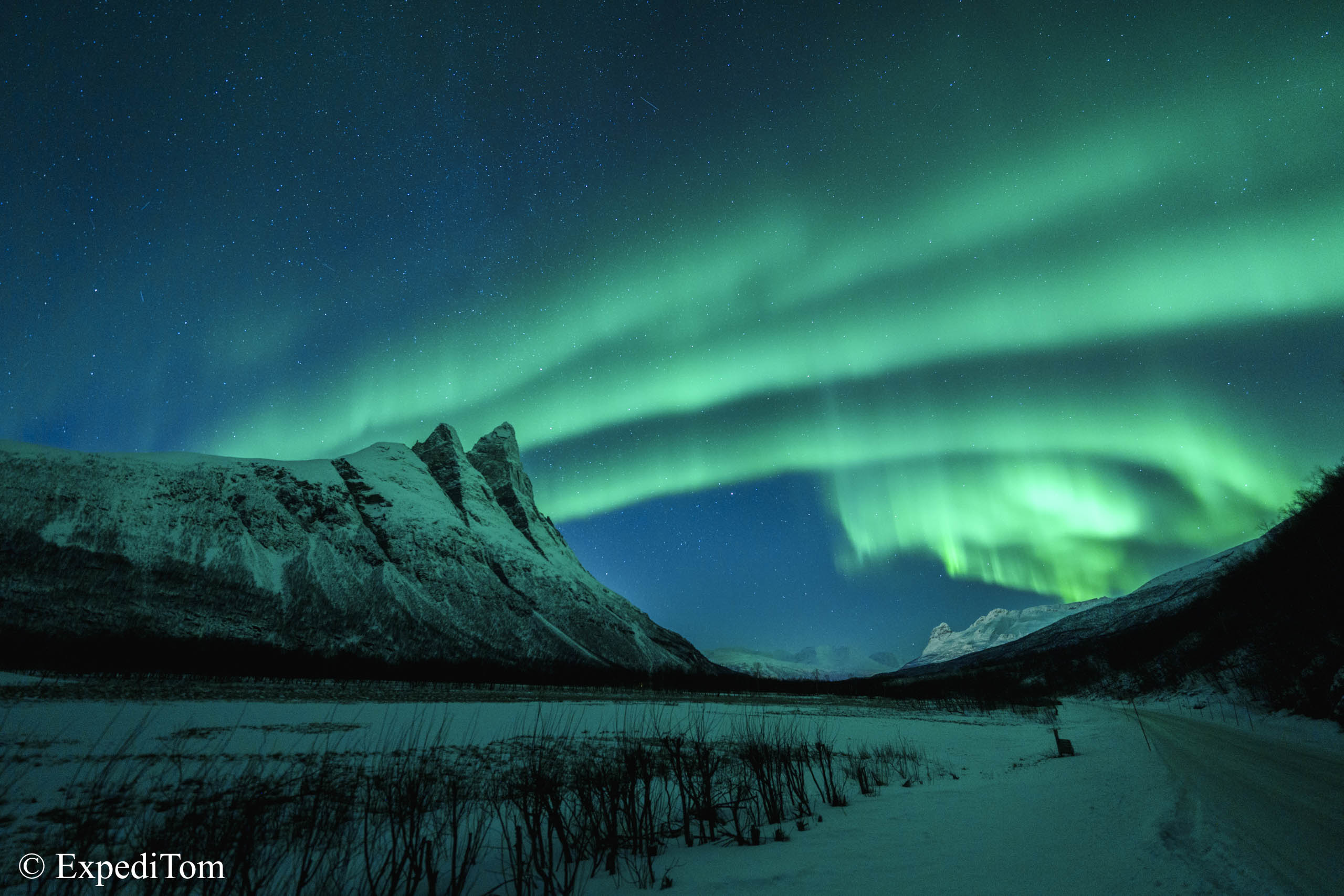
Not everything was as serene as the wildlife. On the last day in Tromsø, there was a clear night, and I made a second attempt at the Otertinden—a mountain that had evaded my lens on a previous trip due to clouds. The sky was finally clear, but the experience was soured by a local resident.
Despite standing on the side of the public road, I was harassed, screamed at, and threatened with the police for “trespassing.” It was a strange, aggressive contrast to the rest of the trip. The situation escalated to the point where they nearly drove into me and another tour group nearby. I called the police myself just to document the harassment. It was a reminder that even in a country with a “right to roam,” tensions can exist in high-traffic photography spots. I stayed calm and tried to find a solution, but some people are simply looking for trouble.
Still, I walked away with more timelapse angles of that mountain than I ever thought possible. I didn’t let one angry dude ruin the Arctic silence.

Arctic Wildlife: What we found and how
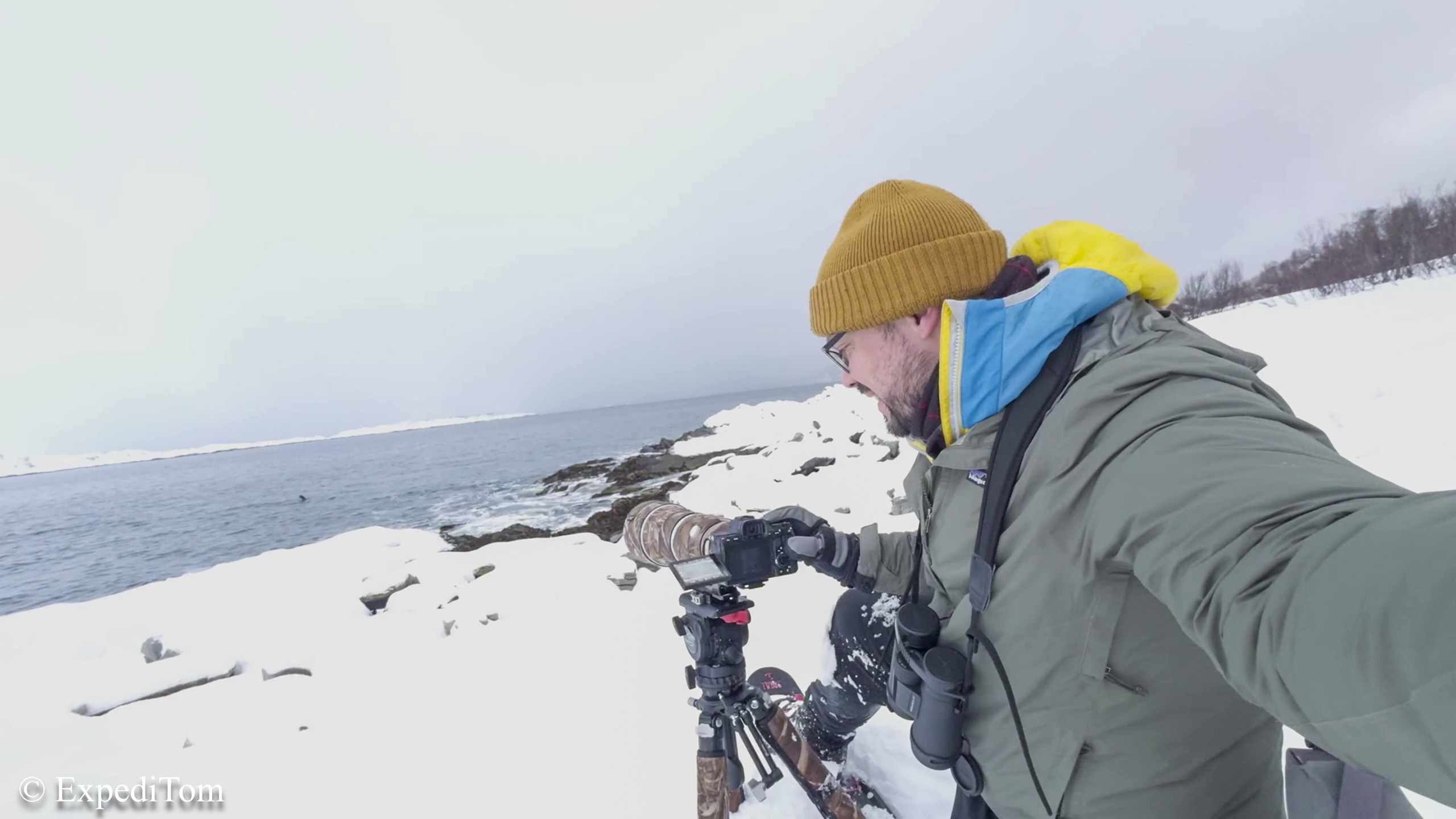
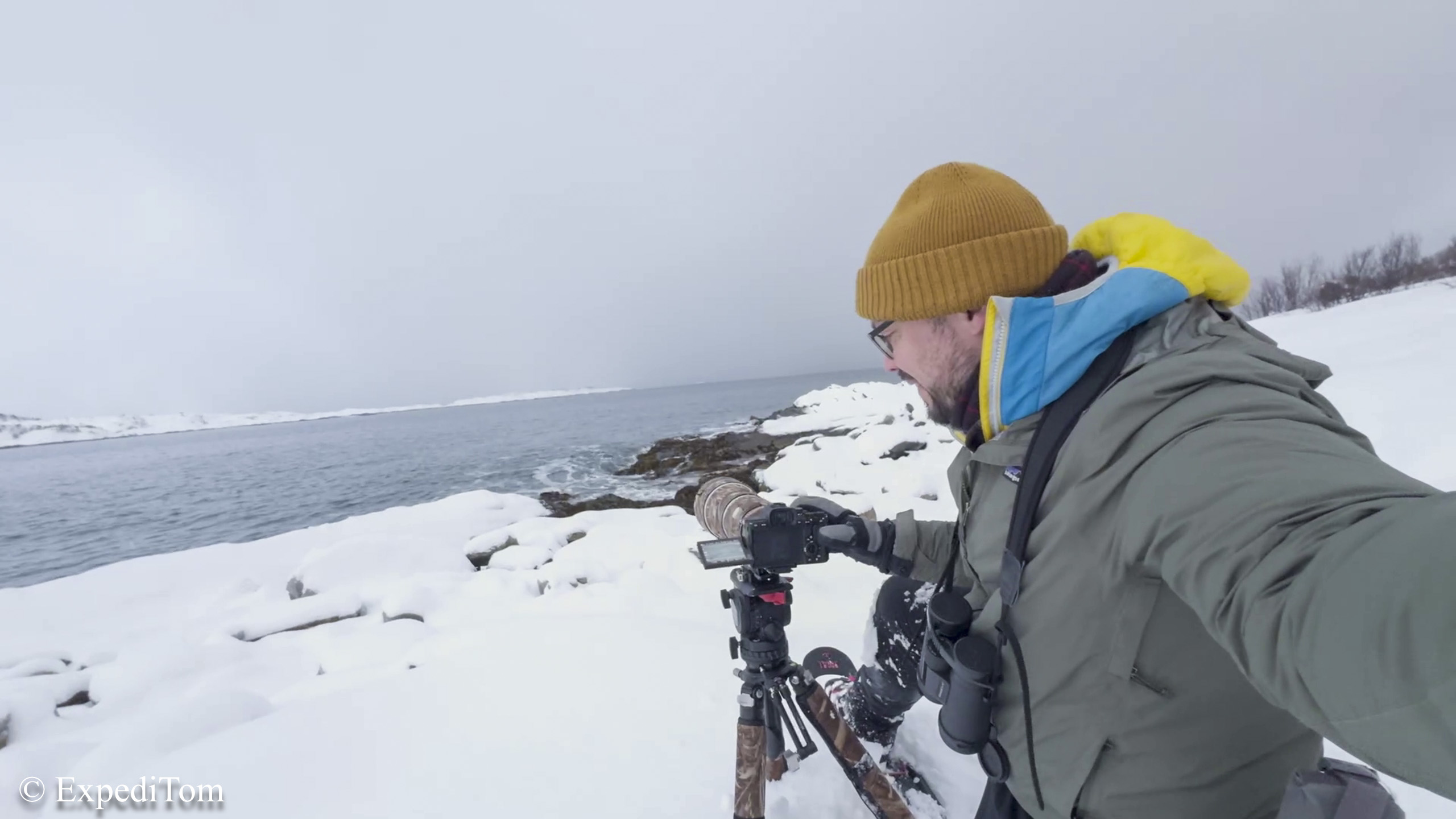
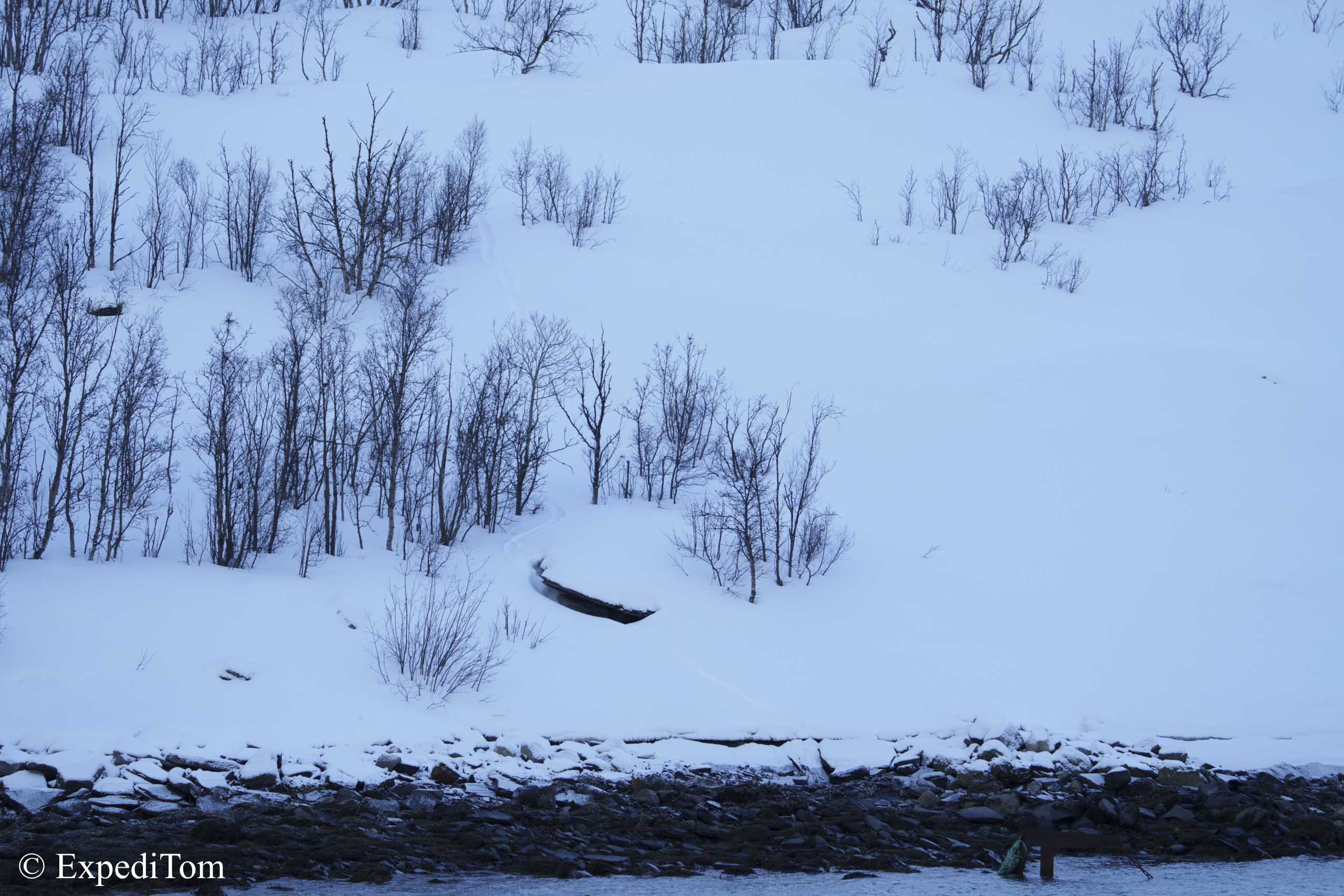
Arctic Wildlife doesn’t always reveal itself to the casual observer; you have to earn it. Every day, I headed out on snowshoes, following the jagged coastline and scanning the white expanse for movement.
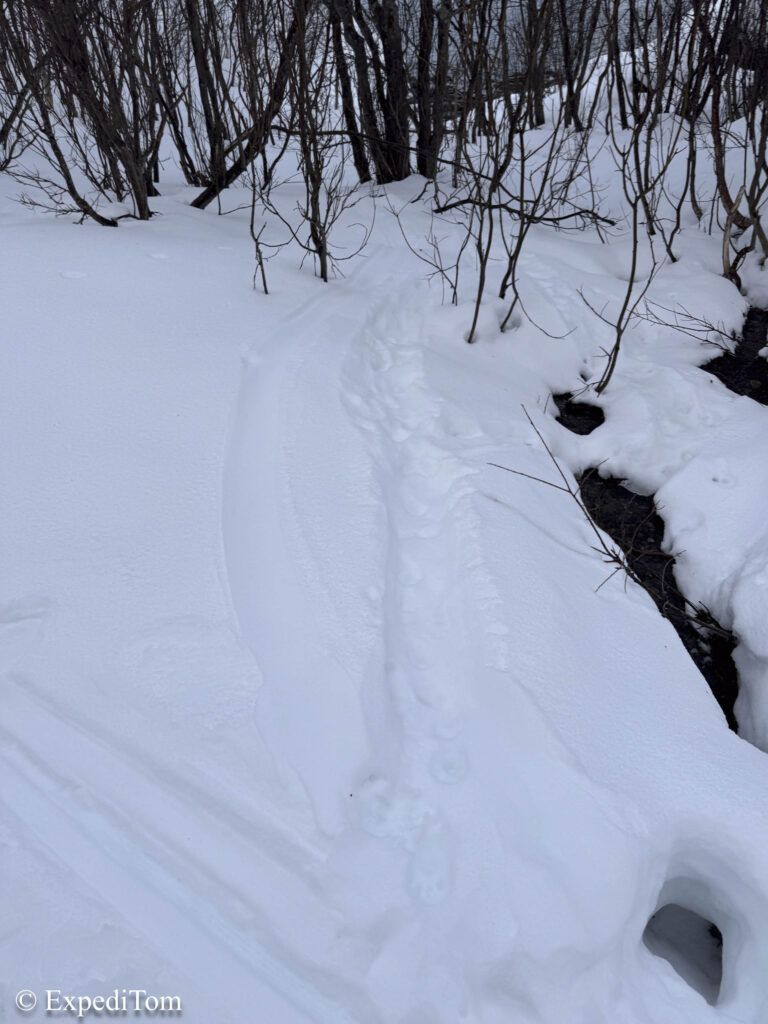


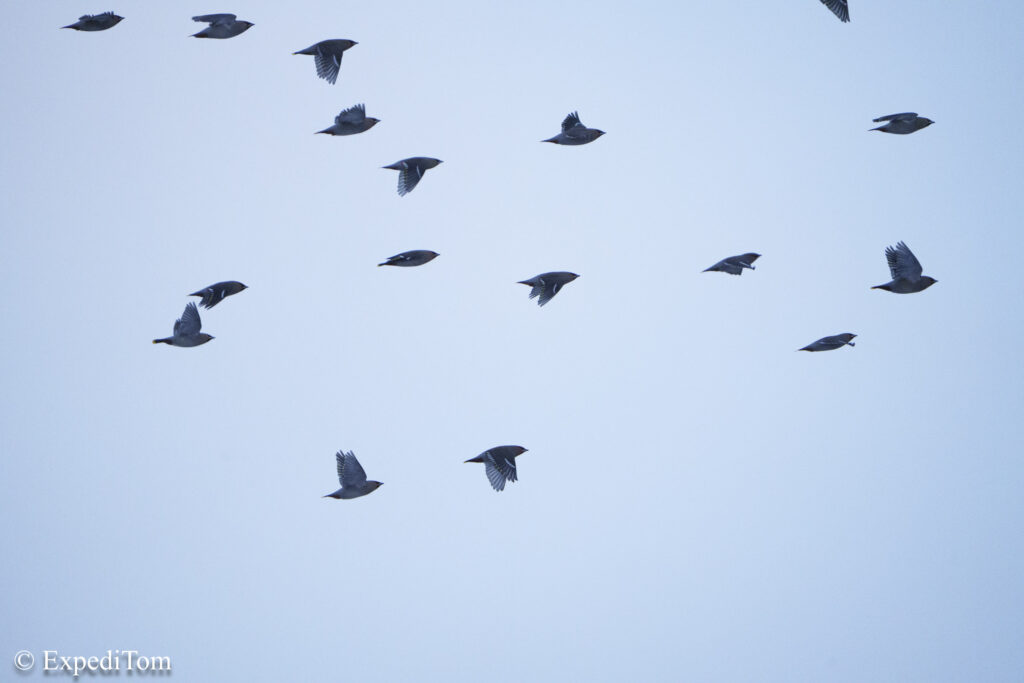
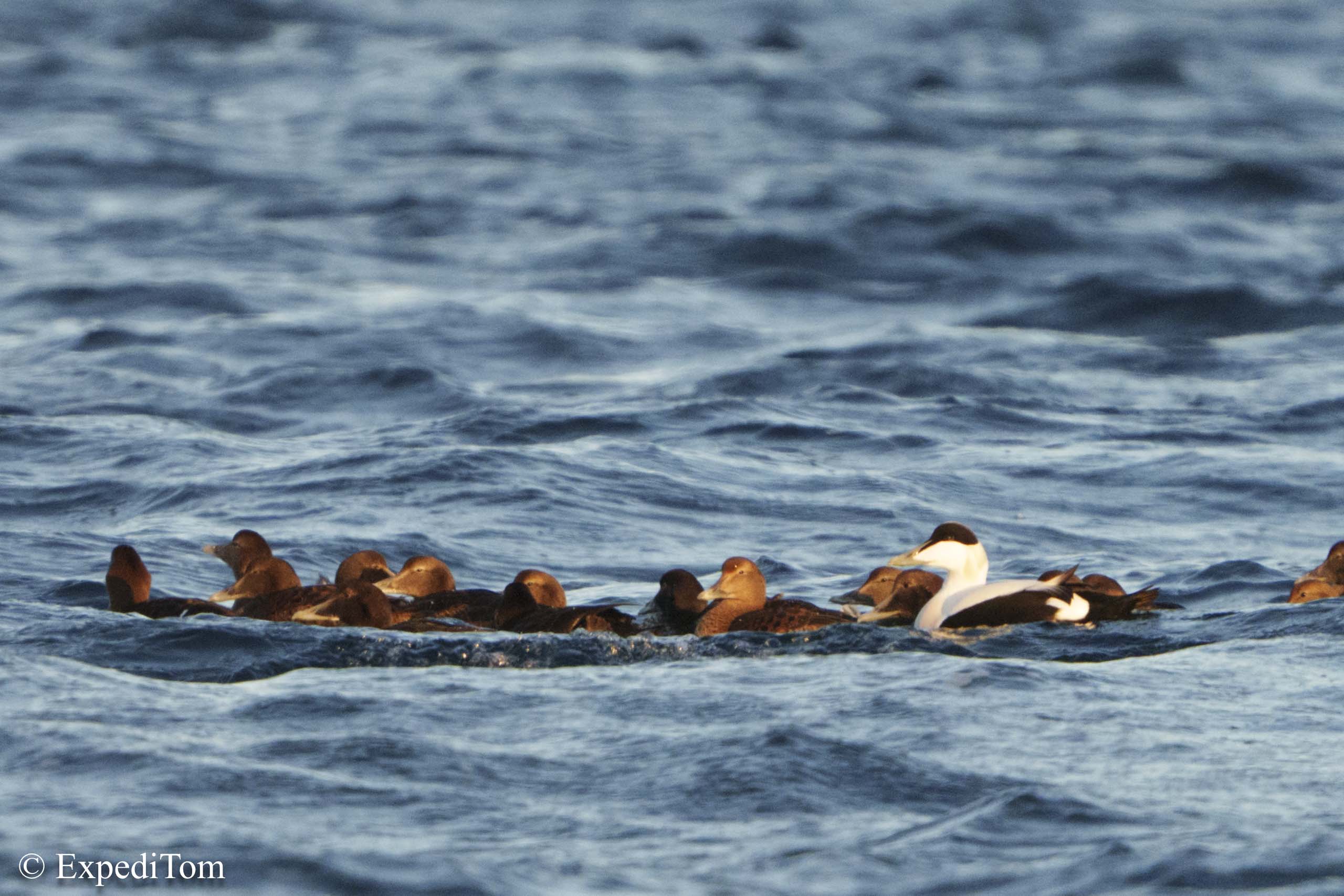
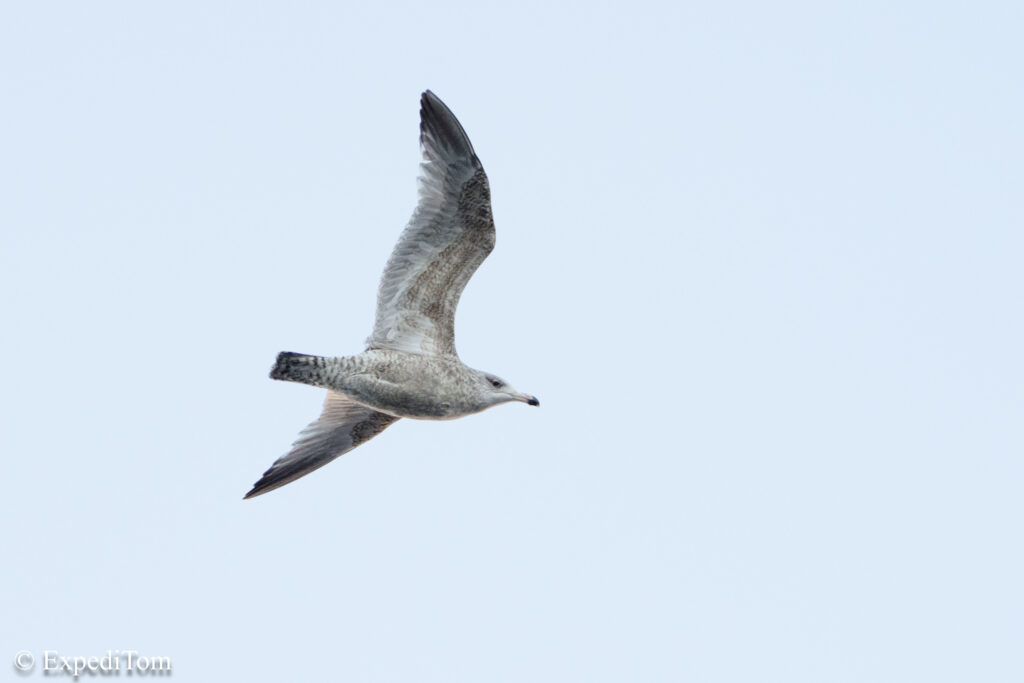
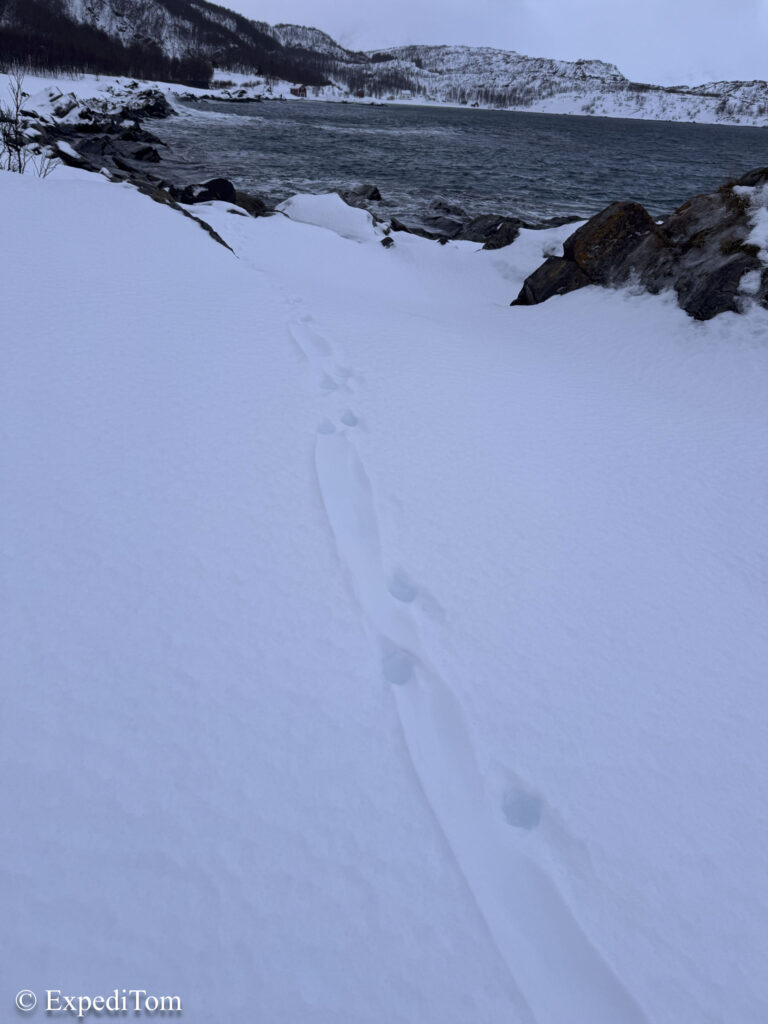
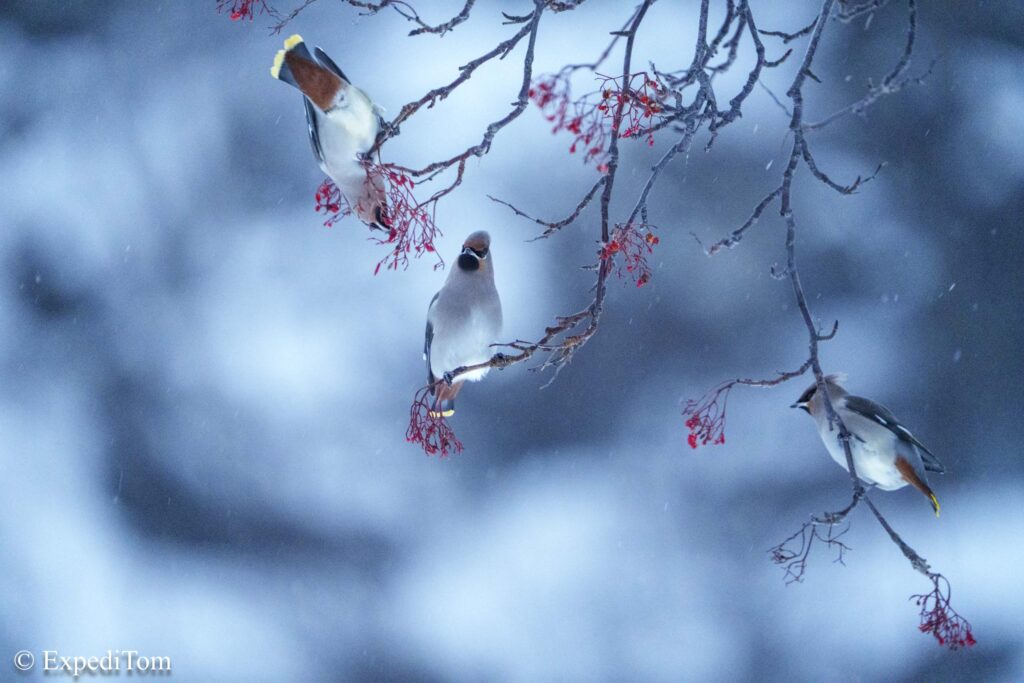
The signs were everywhere. We found fresh tracks daily: moose, Arctic hare, and the delicate prints of snow hens (ptarmigan). Sometimes the encounters were effortless—like the moose we spotted standing quietly by the roadside during a drive, massive and unfazed. Other times, the variety was in the details. Flocks of Bohemian waxwings darted through the trees, white-tailed eagle flew by, while Common eiders and Common mergansers cut through the dark, frigid water between the ice floes. We even kept a hopeful eye out for the elusive lynx, though they remained ghosts in the woods.
But the fish otter (Lutra lutra) became my quiet obsession.



Arctic Wildlife: Tracks in the Snow
Every morning we found fresh tracks near the cabin. Every evening, we had nothing to show for it. It wasn’t until the very last day, as I should have been packing the bags to leave, that I decided to make one final run for it. I again explored from the hut to the next bay, where the view of the coast was unobstructed. I waited.

And then, he appeared.
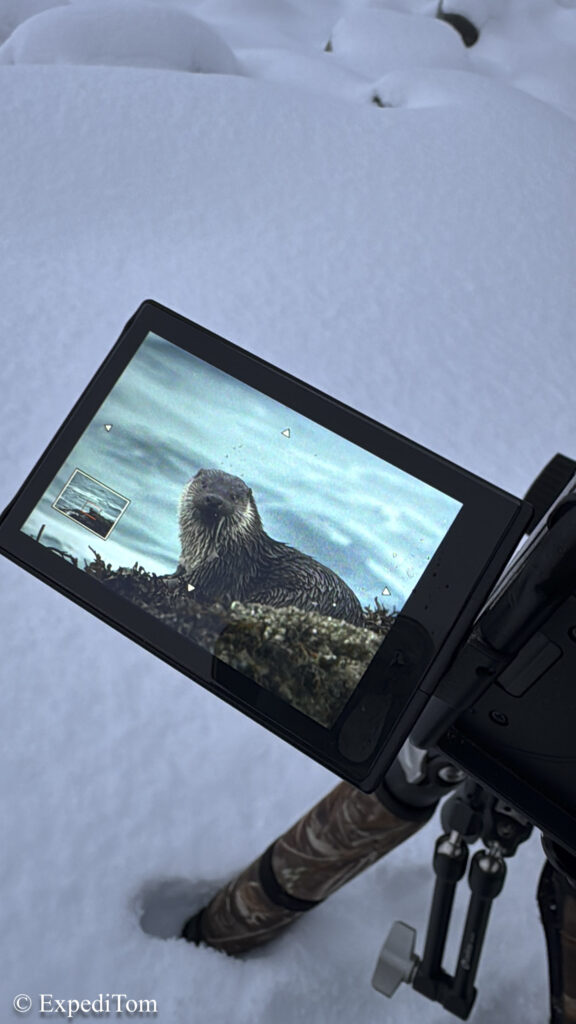
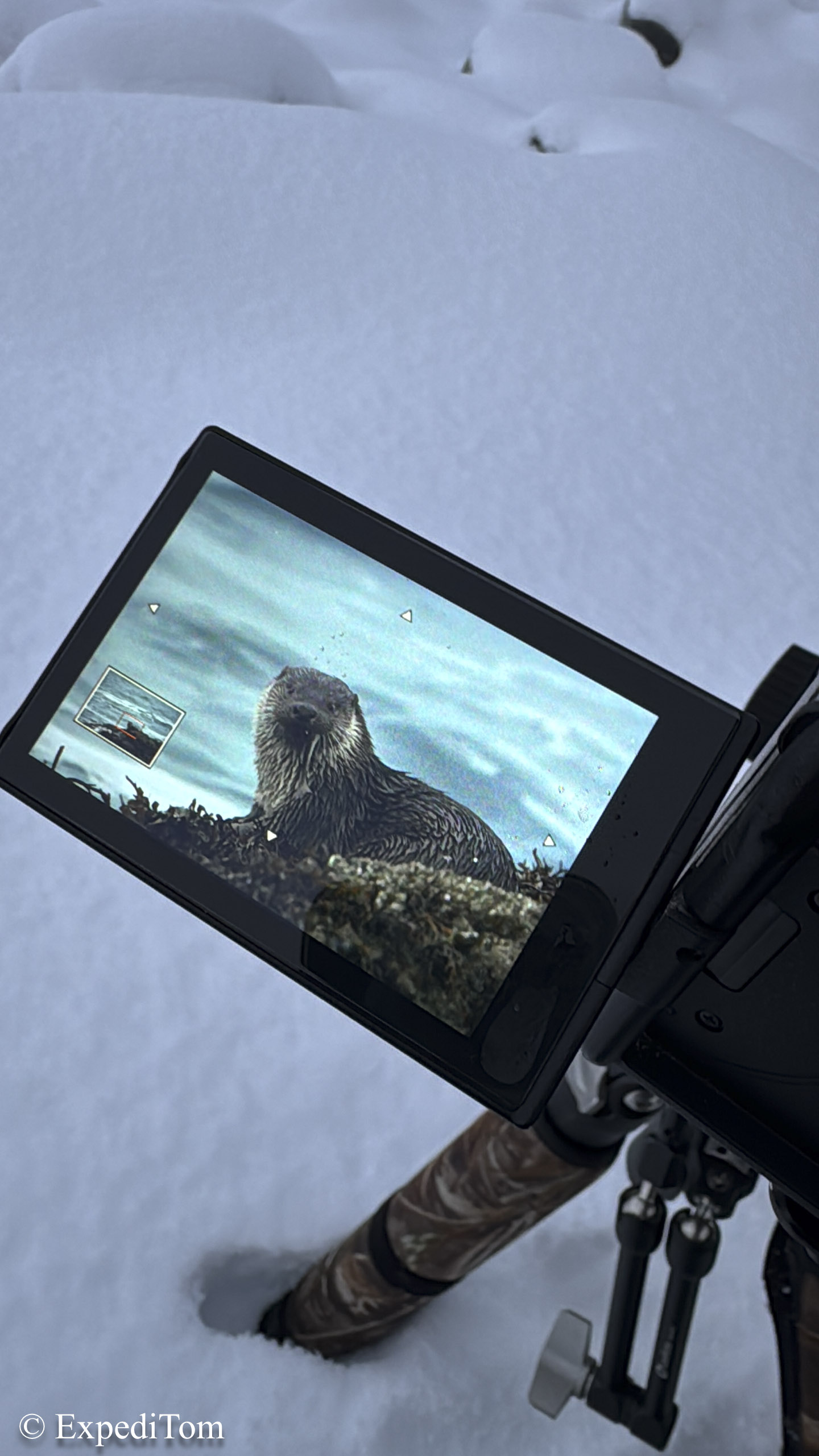
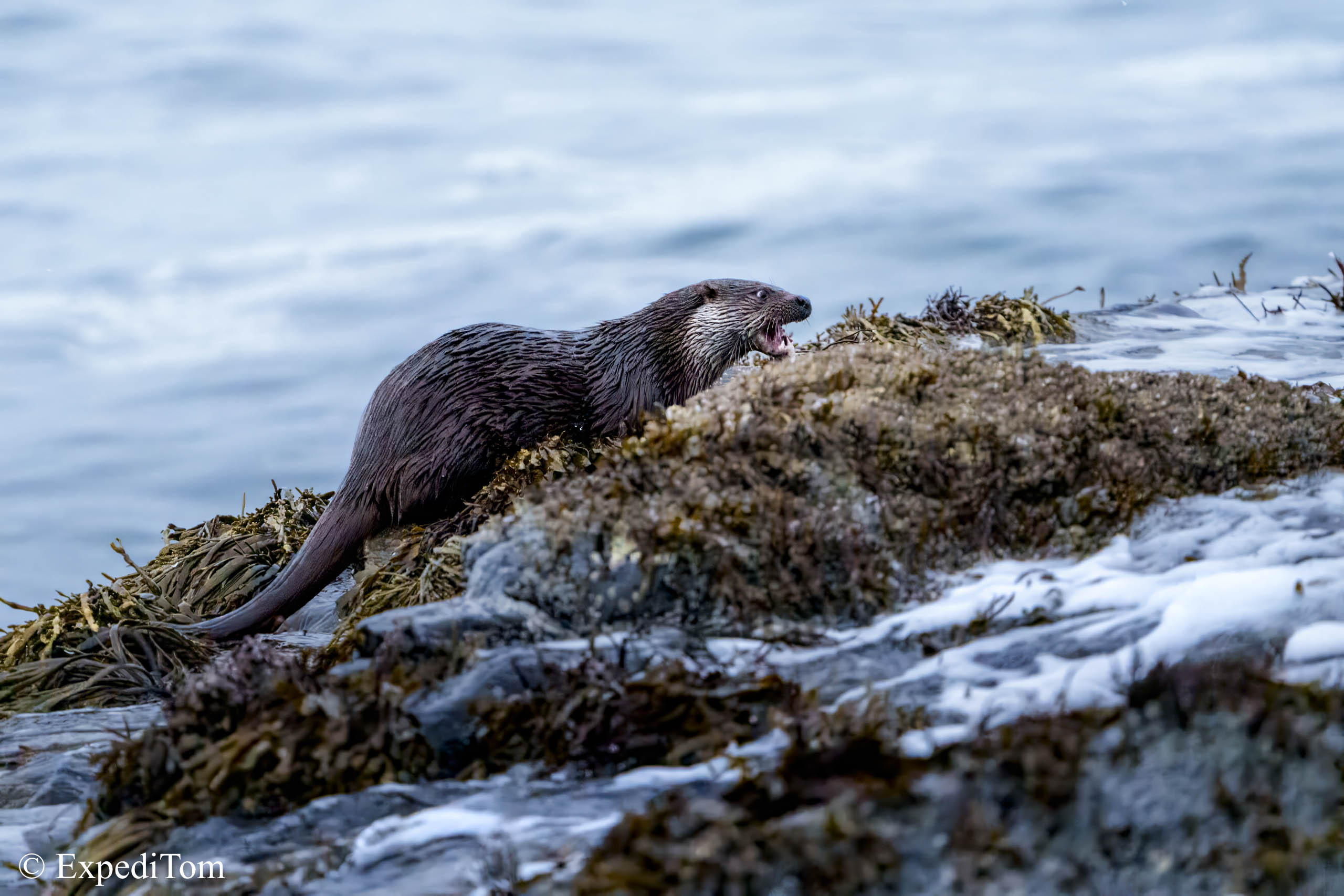
A small mammal surfaced, munching on mussels and fish, holding the snacks in his paws like a tiny, focused chef. He was unbothered by me. He jumped and dove in the sea like a miniature dolphin, totally at home in the freezing brine. At one point, he climbed onto the rocks and looked directly at me—checking the distance, ensuring I was playing by the rules of Allemannsretten. I captured the moment on camera just as a snowstorm began to whip up. He disappeared into the white, and I went back to the cabin with a heavy heart but a full memory card.
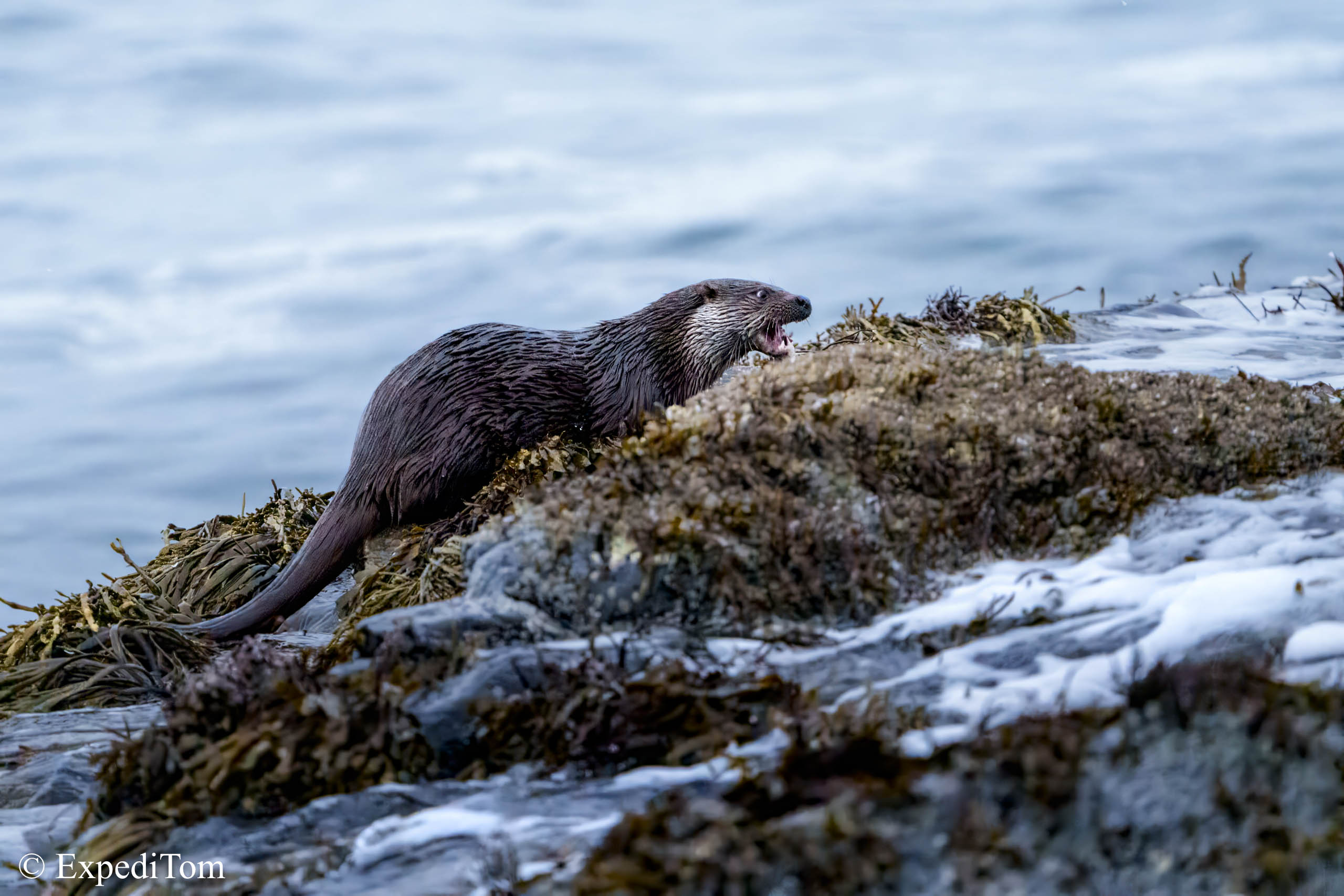
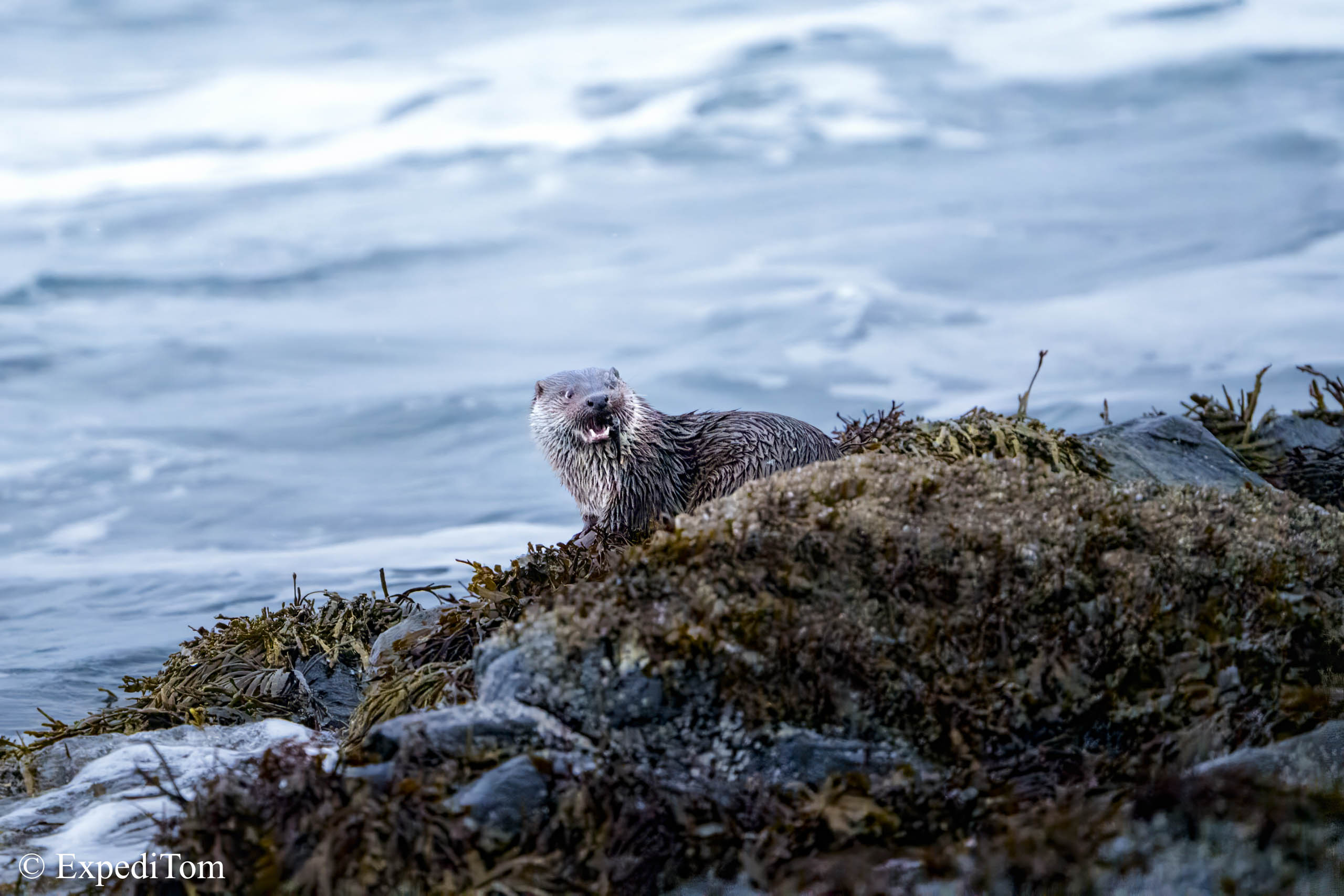
I was glad Larissa had already begun packing my bags.
Under the Dancing Sky
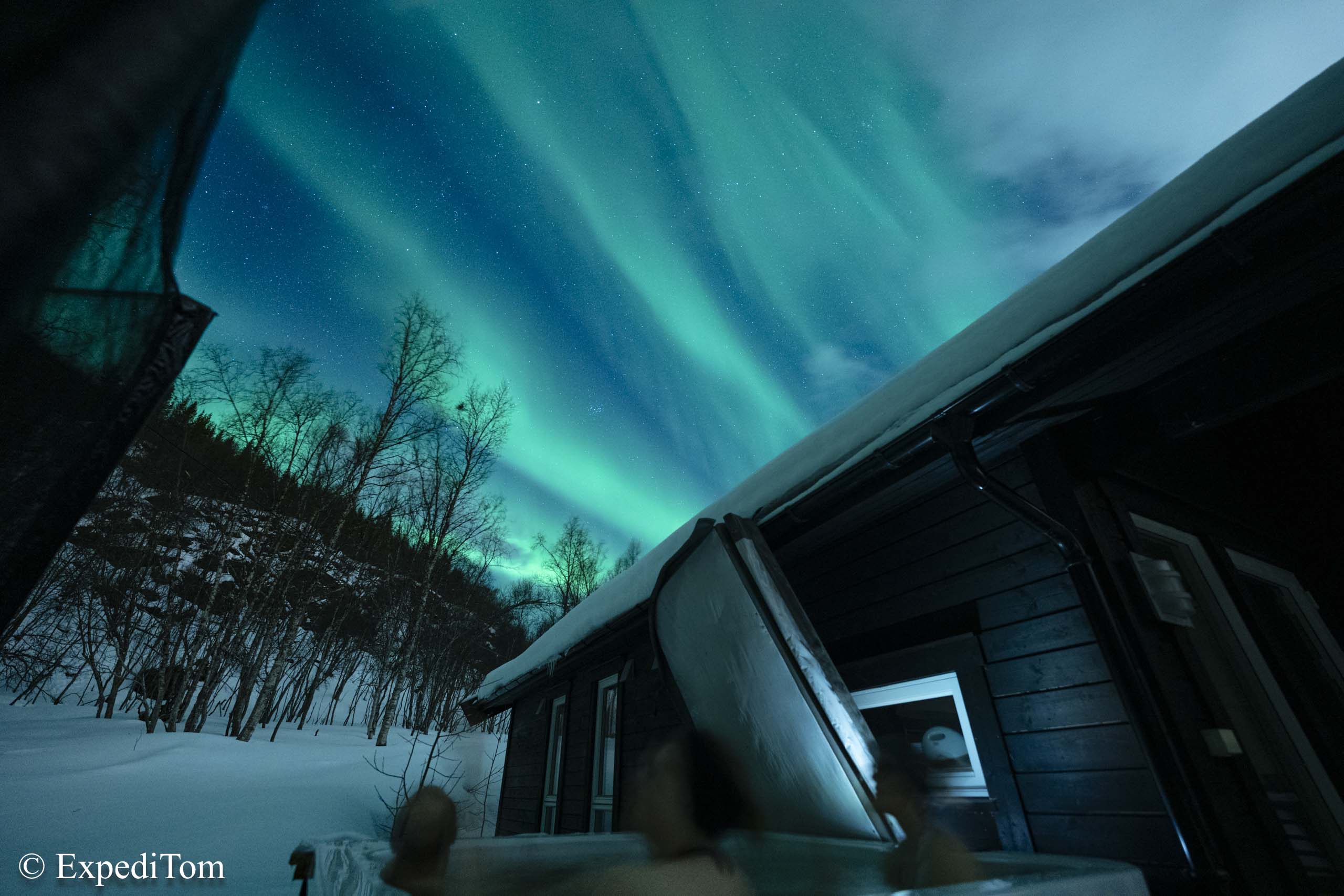
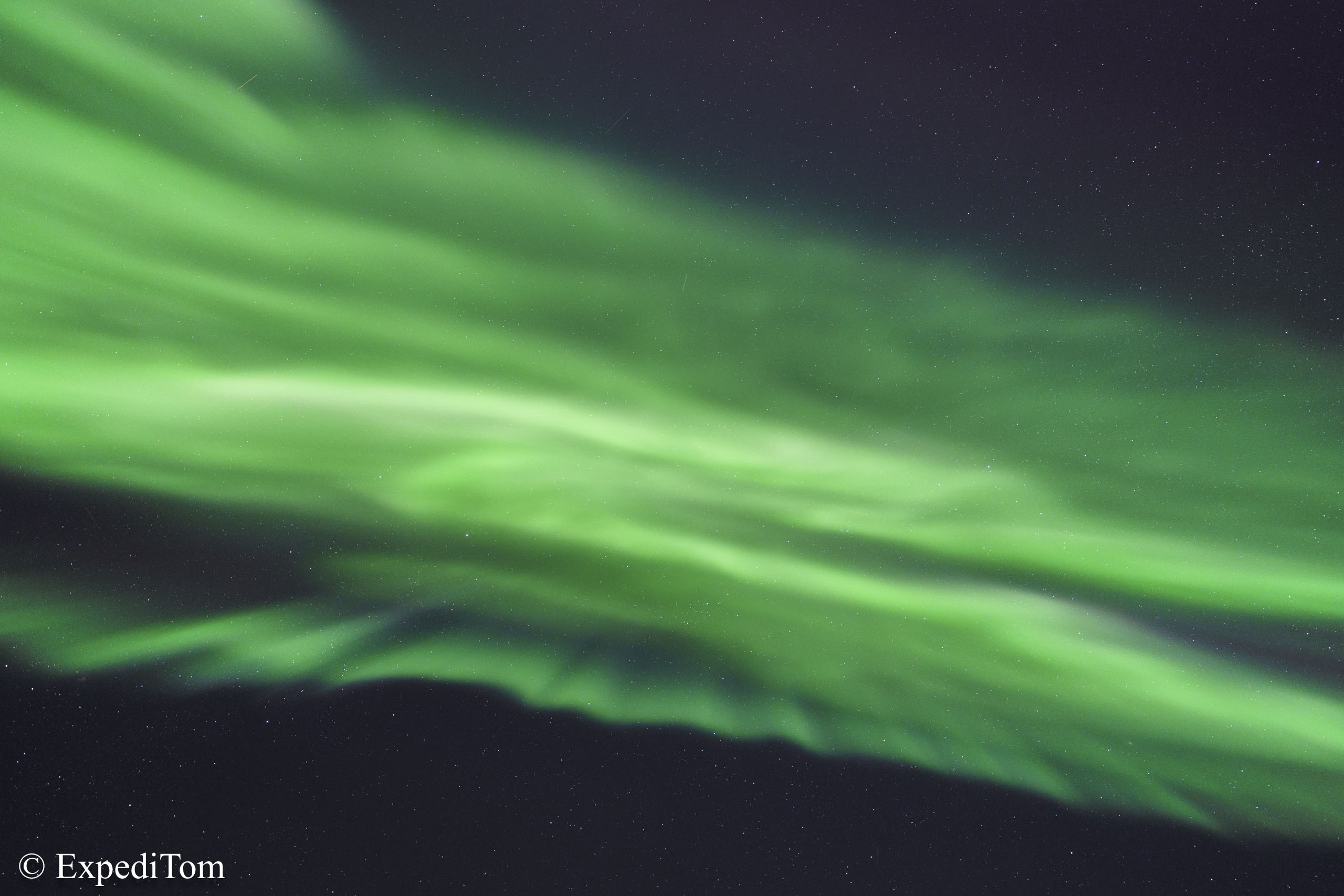
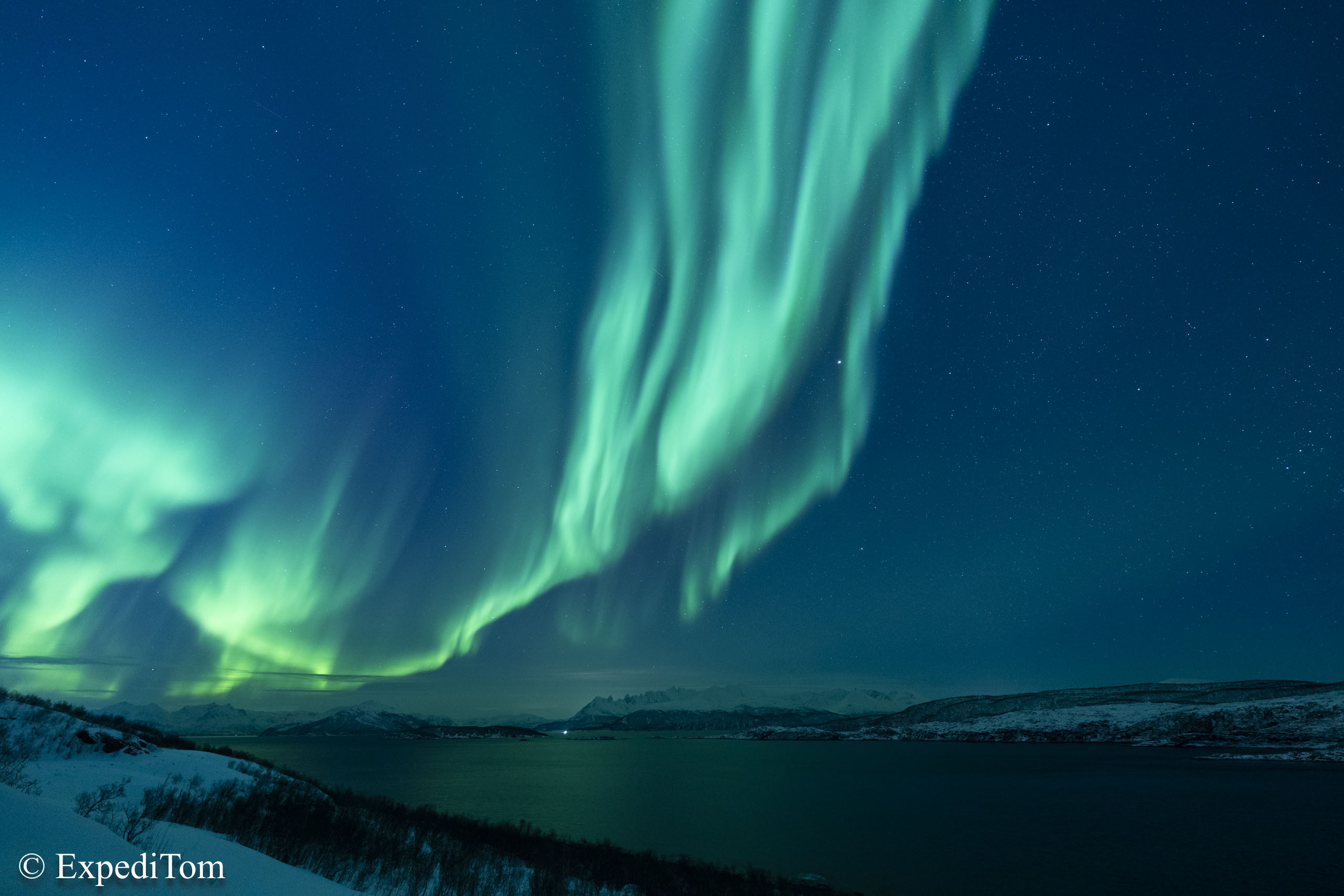
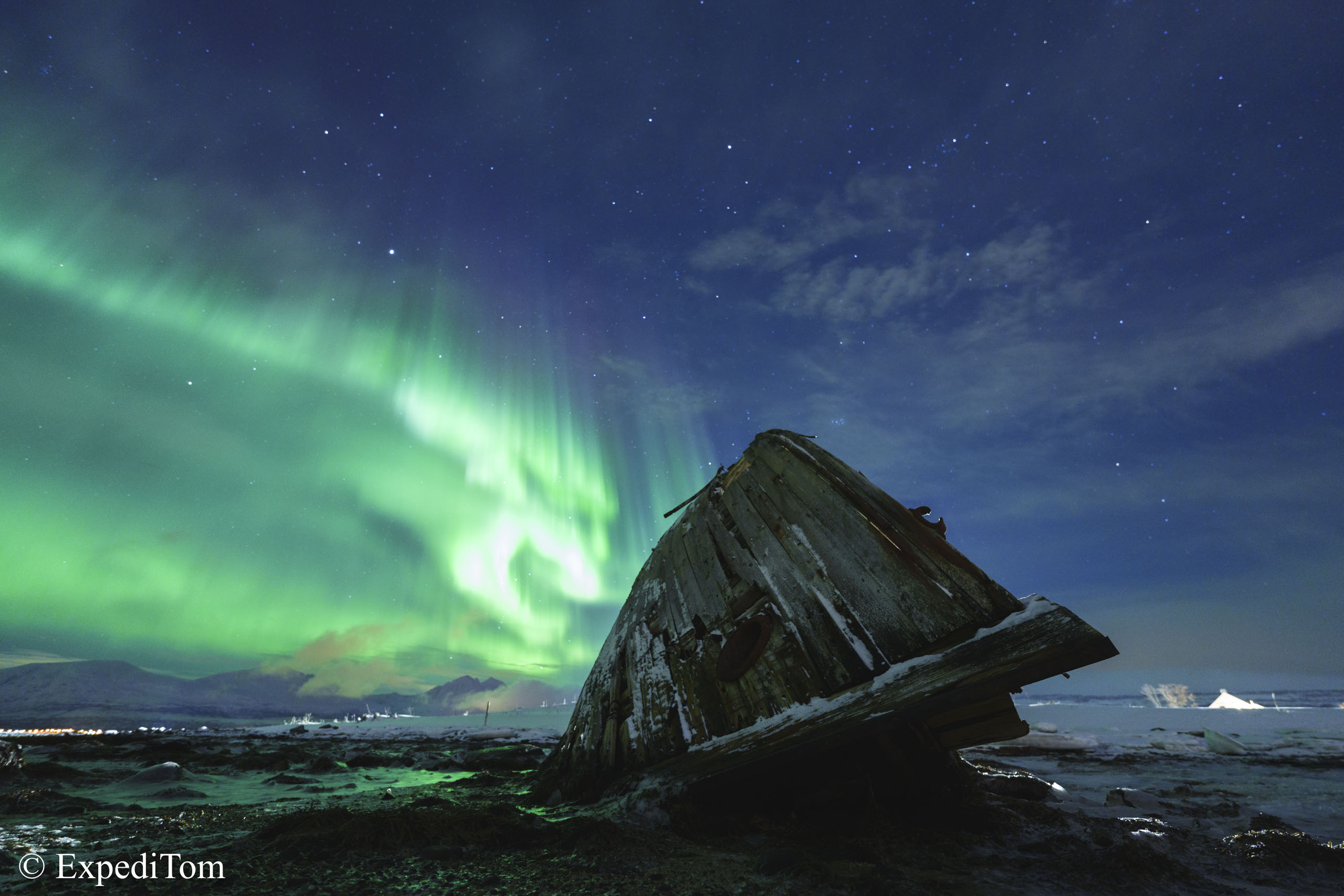
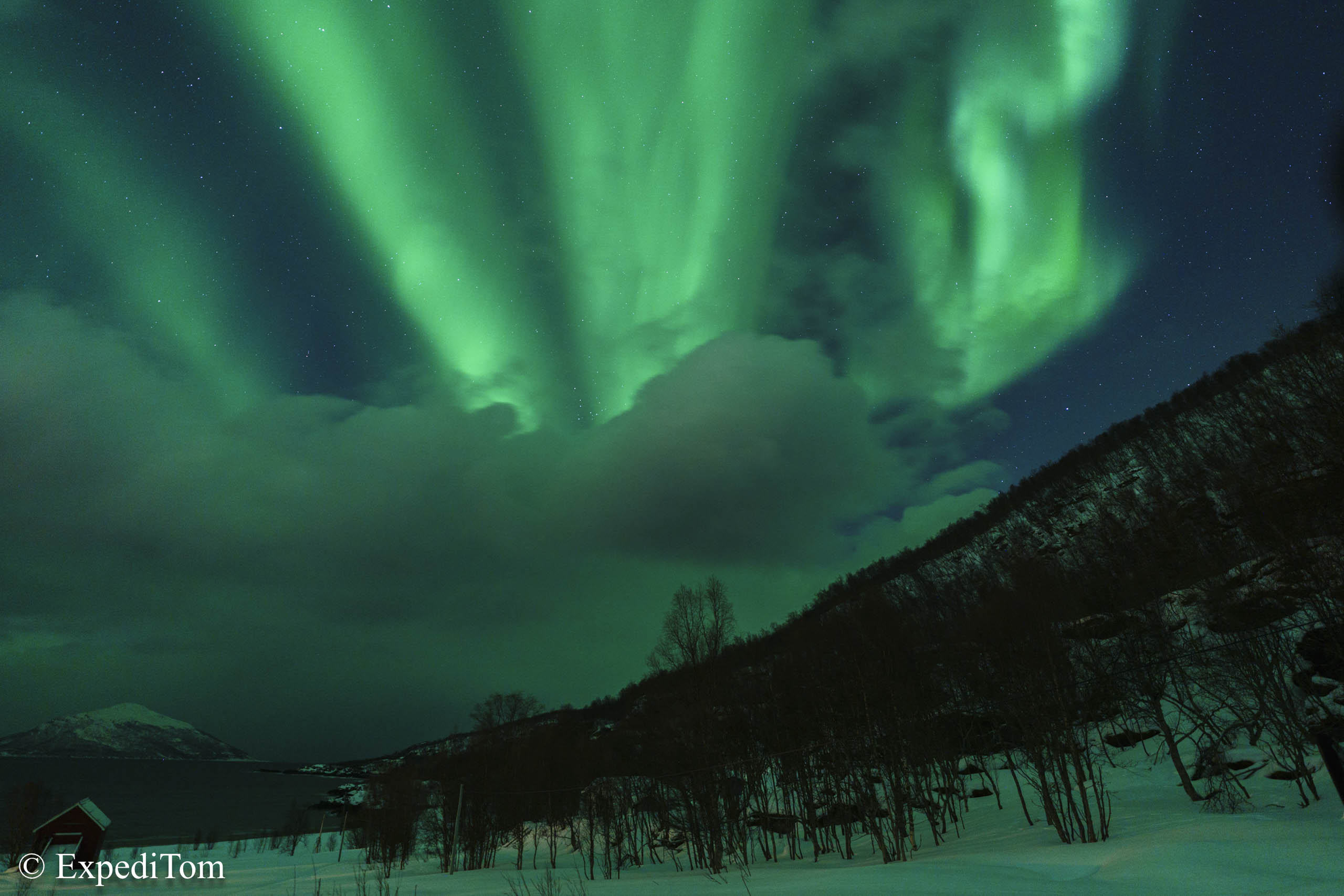
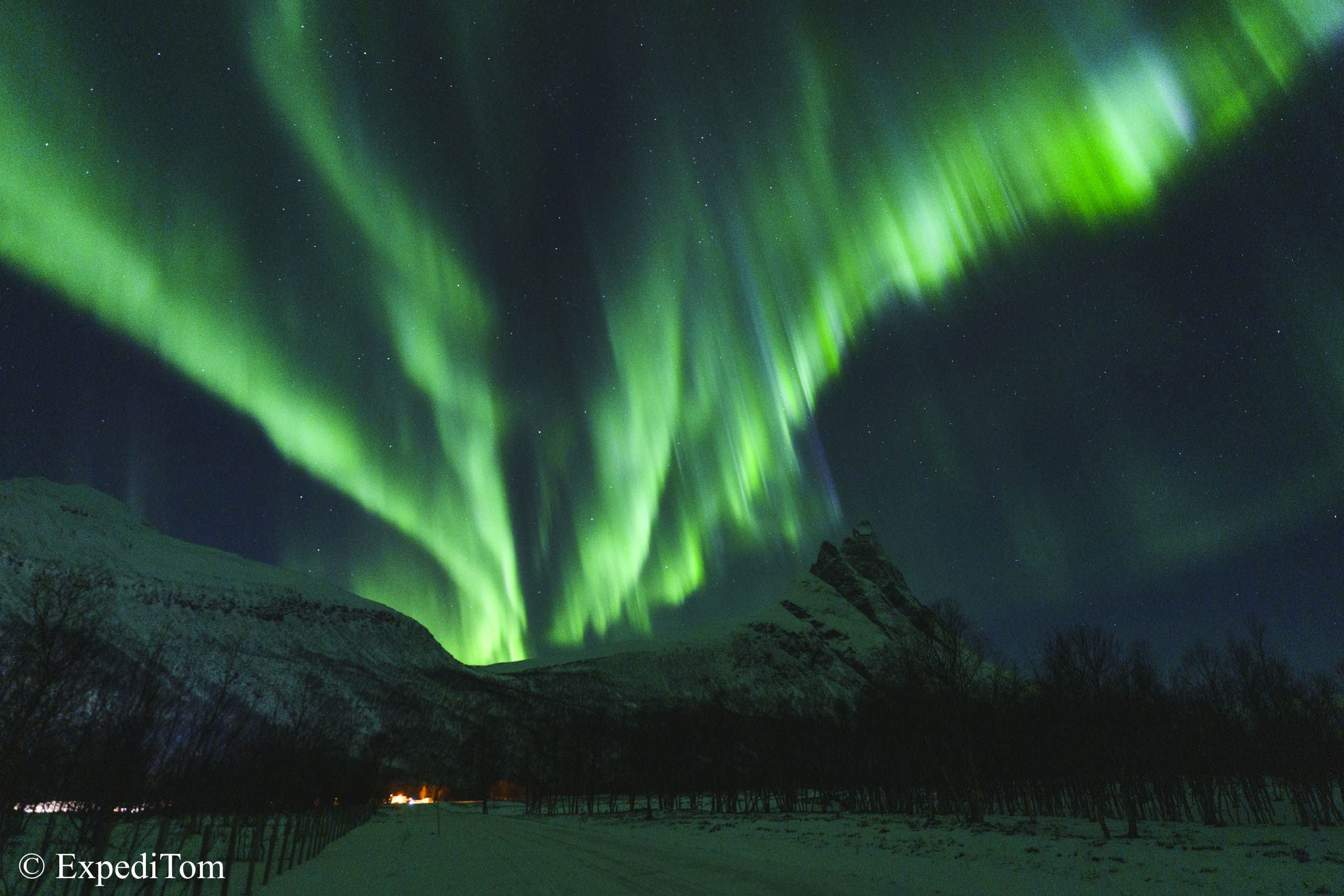
We weren’t particularly lucky with the weather. Out of the entire trip, we had only two clear nights. But when the sky opened, the Aurora Borealis didn’t just appear; it exploded.
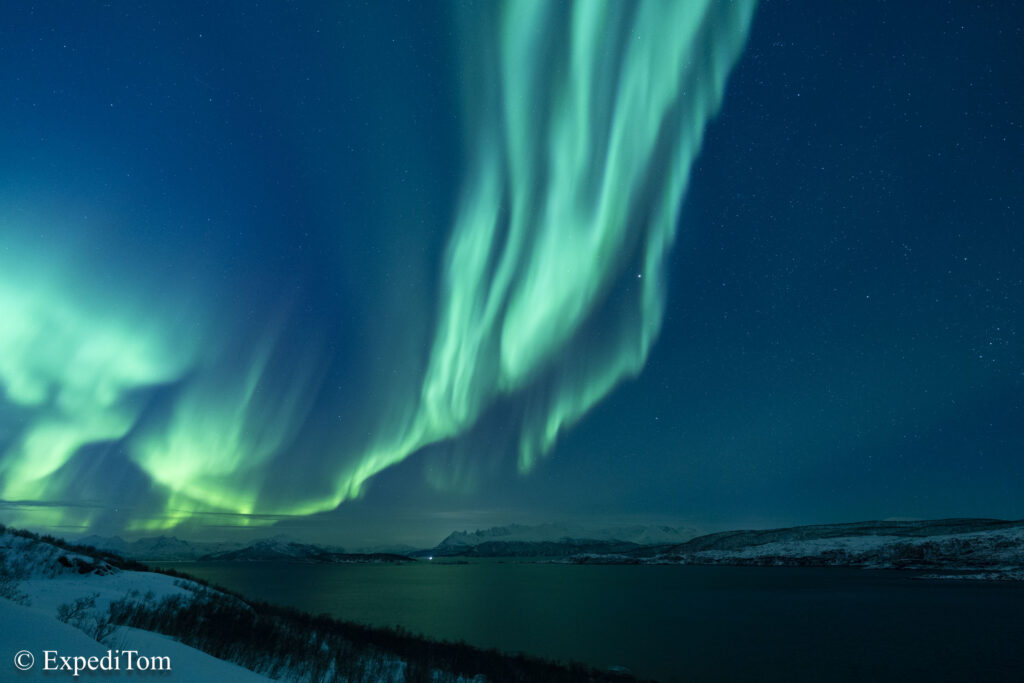

The Northern Lights are notoriously spontaneous, which creates a specific kind of Arctic dilemma. If you want to see the Aurora from a jacuzzi, you have to choose your strategy: you either sit in the bubbles until you’re al dente, or you wait inside and jump straight into the water the second it kicks off.
We usually opted for the latter. We’d be relaxing in the hut when the alert would hit, leading to a frantic scramble from the warmth of the fireplace into the freezing night air, desperately trying to get into the water before the curtains of light faded.

In a strange way, the cloudy nights were a blessing. They saved my sleep schedule and forced us to actually relax rather than chasing the horizon every single hour. But on those two clear nights when the sky finally exploded, every second of “al dente” waiting would have been worth it.
The Gear: Capturing the Arctic
Shooting in the Arctic is a game of two halves: the extreme low light of the Aurora and the long-distance patience required for wildlife. To handle both, I ran a multi-camera setup anchored by my Sony systems.
For the Aurora: Wide & Fast
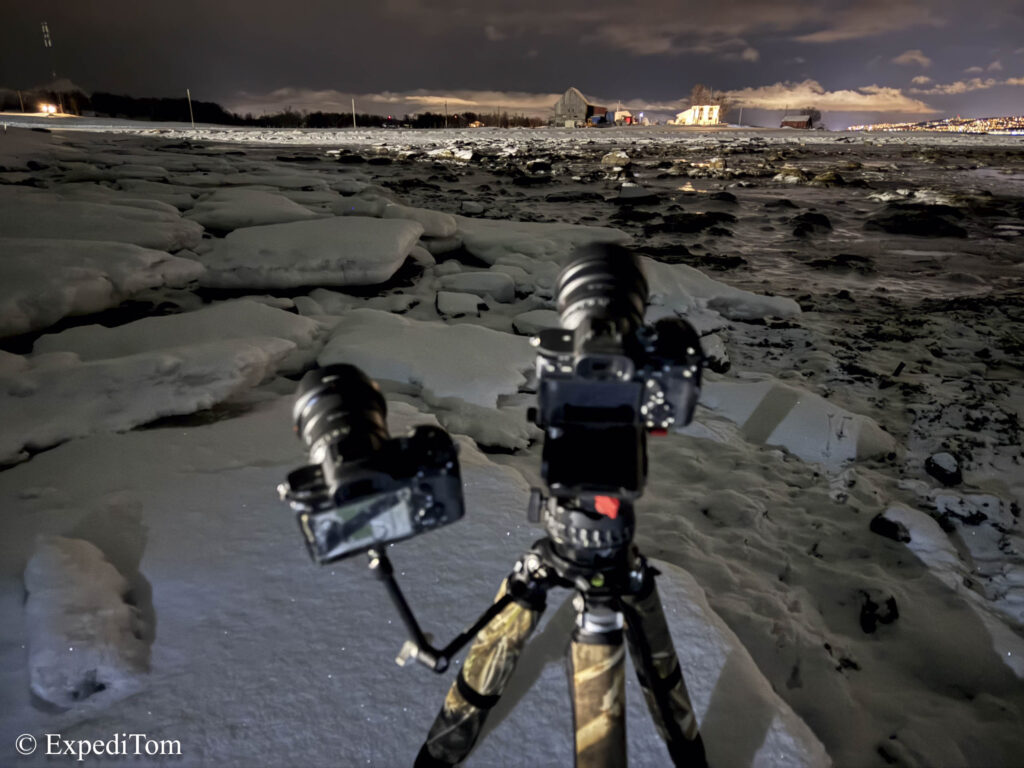
Shooting the Aurora is as much about speed as it is about stillness. When the sky finally explodes, you don’t want to be fumbling with settings in -12°C. For this trip, I ran a three-camera setup to capture multiple angles and timelapses simultaneously:
- Sony A7IV + 14mm f/1.8: My primary wide-angle powerhouse for those massive, sky-filling displays.
- Sony A7III + 20mm f/1.8: A reliable secondary for slightly tighter, more detailed compositions.
- Sony A6500 + 16mm f/1.4: My “scout”, Vlog and additional timelapse rig, still punchy enough for the dark.
The “ExpediTom” Aurora Settings: To keep the movement of the lights sharp rather than a blurry mess, I prefer faster shutter speeds—usually around 3.2 seconds even down to 1/4—pushing the ISO to 3200 or higher to compensate. I lock my Manual White Balance at 3900K to keep the night sky looking natural, and I shoot in Adobe RGB to ensure I’m capturing every subtle shade of those deep Arctic greens.
Everything was anchored on my Leofoto Summit Tripod, utilizing a Magic Arm and a Ulanzi mini tripod for those low-to-the-ground shots in the snow. Most of the heavy lifting for the timelapses was handled by the internal intervalometers, letting me step back and actually enjoy the show.
For Wildlife: Reach & Precision
In the Arctic, “close” is a relative term. You want to respect the animals’ space—especially in deep snow where they can’t easily retreat.
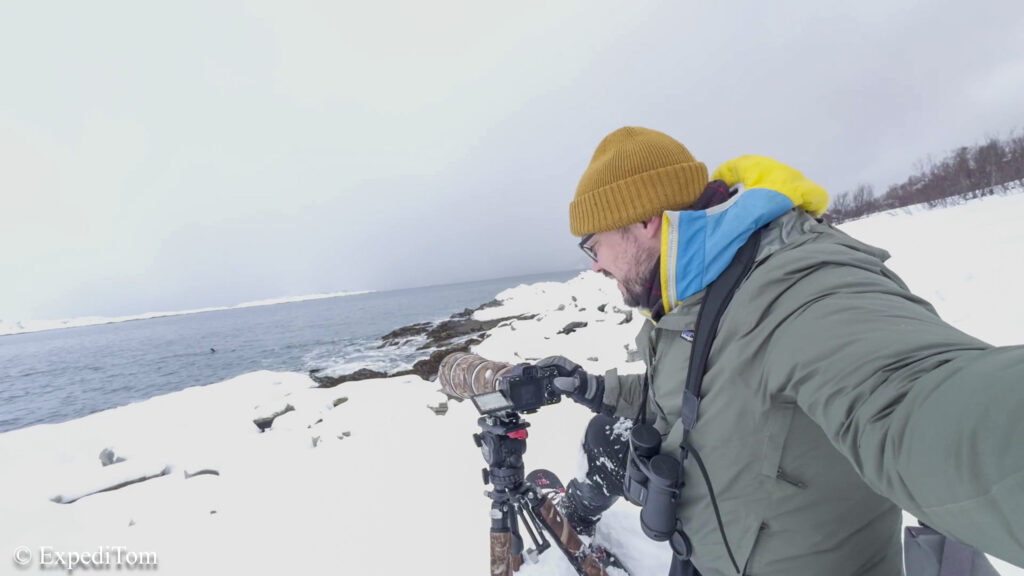
- Sony 200-600mm f/5.6-6.3 G OSS: This was my workhorse for the otters and waxwing. The internal zoom is a lifesaver; because the lens doesn’t extend, you aren’t “pumping” freezing, moist air into the barrel.
- Sachtler FSB 8 Video Head: For smooth, cinematic tracking of moving animals, this head is unbeatable. Even at 600mm, the pans are butter-smooth, which was crucial for filming the otter’s “dolphin-like” movements in the waves.
- Nikon Monarch M5 8×42 Binoculars: You can’t photograph what you can’t find. These were glued to my neck. The 8x magnification and 42mm objectives provided the perfect balance of brightness and stability for scanning the coastline in the dim polar light.
Most of my daytime vlogging was actually shot on the iPhone 15 Pro. Using the Blackmagic Cam App, I recorded everything in Log. The quality is staggering—it rivals dedicated mirrorless cameras while being completely inconspicuous. It allowed me to capture honest, behind-the-scenes moments without the friction of a large rig, making it the ultimate tool for staying mobile in the snow.
A note on Sami tourism
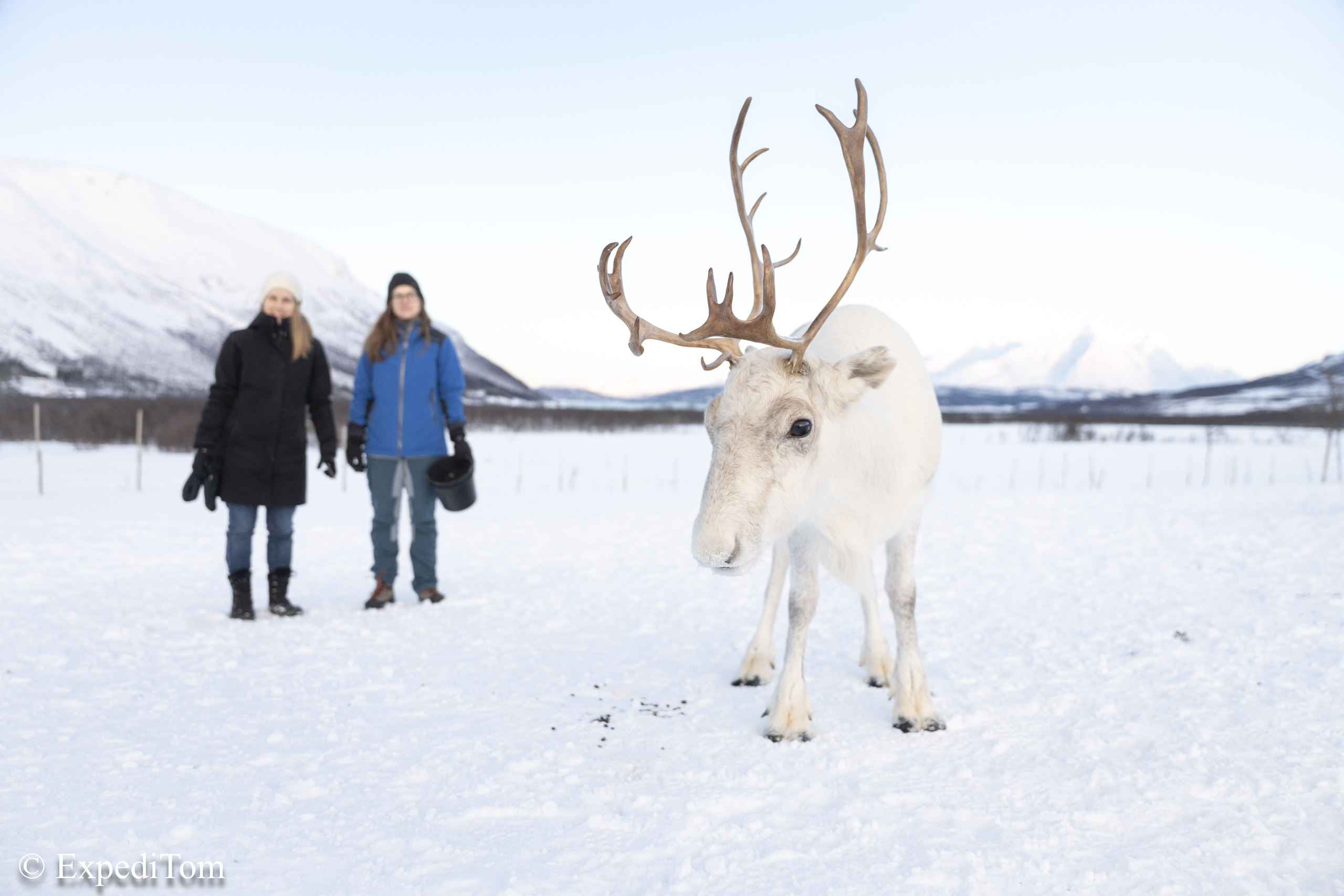
On the way back we joined a Sami cultural tour — reindeer, traditional stories, a glimpse into a way of life that has existed in this landscape for thousands of years. The content itself was genuinely interesting. The reindeer were calm and strange and wonderful to be close to, and the stories told by our host had a weight to them that felt worth hearing.
But we did it on a bus with fifty other tourists.
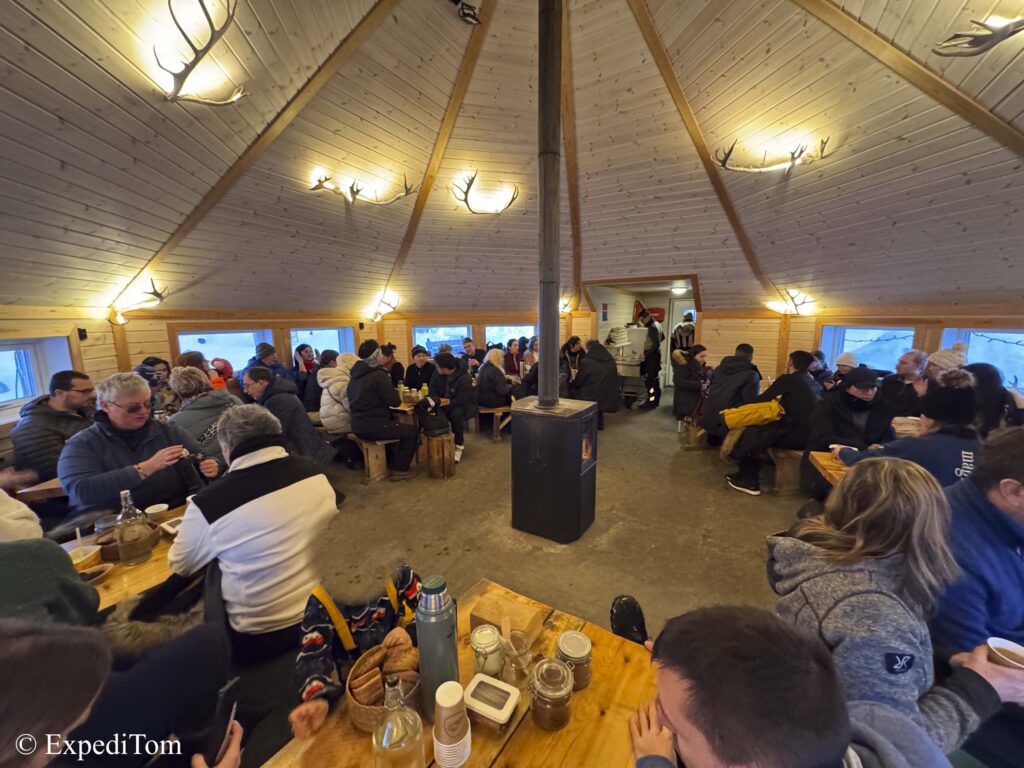
After a week of near-total solitude — no roads, no noise, just snowshoe tracks and otter prints and two nights of aurora — climbing onto a coach with that many people felt like a hard landing back into a different kind of travel. The experience wasn’t bad. It just revealed the contrast sharply. When you’ve been alone in the Arctic for a week, a group tour hits differently.
If you’re going to do a Sami experience, and I’d encourage you to — look for smaller operators running groups of ten or fewer. The stories deserve more space than fifty people in a coach allow.
Final Thoughts
We went to Skjervøy for whales. We didn’t see a single fin.
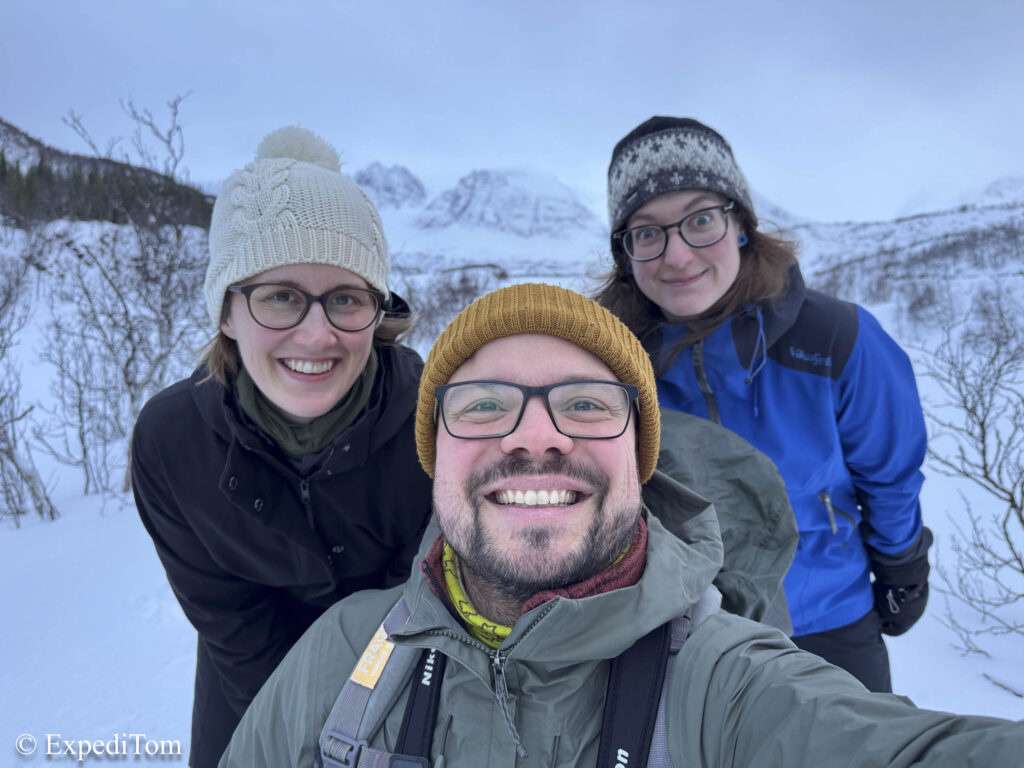
What we got instead was the slow rhythm of the North — otter tracks every morning and finally the animal itself on the last possible day, two nights of aurora that didn’t hold back, a moose on a dark road, waxwings in the birches. The kind of things that only happen when you stay long enough and move slowly enough to let them.
Not everything was quiet. One evening ended in a confrontation at a roadside in Otertinden that made no sense and left a strange taste. A Sami tour that was genuinely interesting and genuinely too crowded. The Arctic doesn’t promise a clean experience — it just promises a real one.
Sometimes, the best adventures are the ones where your original plan fails, leaving room for the Arctic to show you what it actually wanted you to see.
Read the previous Post about Norway here!
FAQ
November through mid-January, following the herring migration. The window can close by the third week of January — check with local operators before booking if orcas are your primary reason for going.
Roughly two to two and a half hours in winter conditions, including two ferry crossings. The ferries are easy — automatic plate scanning, no cash needed — and worth taking rather than the all-land alternative. Unless, inclement weather prohibits ferries from leaving, which can happen.
It depends heavily on your experience with winter driving. The roads are maintained, but black ice, poor visibility, and sudden snowfall are routine — not exceptional. Accidents happen regularly, and moose crossings add a genuinely serious risk that’s easy to underestimate. Local drivers move fast and know the roads; don’t take that as a cue to match their pace. Proper winter tyres are non-negotiable, spike boots help when you’re on foot, and if you’re not comfortable driving on ice, the ferry and bus connections in the region are worth using instead. Don’t let the scenery distract you from what the road is doing.
Moose, Eurasian otter, ptarmigan, Arctic hare, Bohemian waxwing, white-tailed eagle, Common eider, Common merganser — and with serious luck, lynx. Tracks and signs are abundant even when the animals themselves stay hidden.
There’s a direct bus connection from Tromsø to Skjervøy, so a car isn’t strictly necessary. That said, having one changes the trip significantly — the ferries become part of the experience, you can stop when something catches your eye, and getting to a remote cabin without road access is a lot easier when your host can meet you somewhere reachable. If you’re not comfortable driving on ice, the bus is a genuine option. Just know that the spontaneity goes with the car.
Honestly — not many. We had two clear nights out of a full week. That’s not unusual for January in this part of Norway. Cloud cover is the default, not the exception. Go in expecting to wait, build in more nights than you think you need, and treat every clear sky as a bonus rather than a given. The two nights we did get were worth the wait. But if you’re flying in for a long weekend specifically for the aurora, manage your expectations carefully.
The experience itself — feeding reindeer, hearing the stories, understanding something of a culture that’s been tied to this landscape for millennia — is genuinely worth your time. What’s worth knowing beforehand is that many of the larger operators run it as a high-volume group tour, buses of fifty or sixty people at a time. After a week in a remote cabin with no neighbours, that format felt jarring. If this matters to you, seek out smaller operators who run more intimate groups. The content is real; the format varies enormously and changes the whole feel of it.


Leave a Reply